A Christmas Bowl
We never know how the motivation to give will affect others—regardless of the size or condition of the gift.
A Christian’s motivation to give flows from what God is doing within a believer to reshape his perspective on life. Genuine generosity is not part of the natural man; it is a fruit of the Spirit. It reflects the pure nature of God Himself, who gave His Son as the ultimate free gift.
Through this Spirit-given motivation, God makes believers aware of the needs He desires to meet through them. When we respond, our ministry rises above mere human effort. It becomes marked by maximum effectiveness and minimum weariness. Because God shapes each person uniquely, our expressions of giving vary according to temperament, ability, background, age, gender, culture, and circumstances.
These differences in people—and their gifts—remind me of something deeply personal from my childhood, and something deeply timeless from a classic story.
A Third-Grade Gift
When I was in the third grade, it was common for students to give their teacher a Christmas present. The joy of giving something from the heart is indescribable. Yet my family was very poor; we didn’t have the means to buy gifts for teachers.
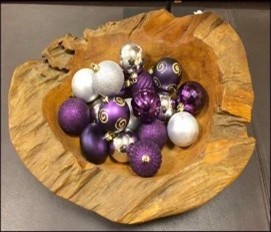
But one Christmas, I wanted so badly to give my teacher, Mrs. Tucker, something, anything. A few nights before the class party, I took a slice of pine from a tree we had cut for firewood that winter and decided to make something with my own hands. With a pocketknife and an old flathead screwdriver from my father’s toolbox, I carved a small bowl, sanding it smooth, then rubbing it with old furniture oil until it shone.
I filled it with leftover Halloween candy, wrapped it in aluminum foil, and tied a shoestring bow around it.
At the party, surrounded by elegant, store-bought gifts, mine looked pitiful. Kids snickered as Mrs. Tucker opened it. I hid, embarrassed. It was the best I could offer—handmade, heartfelt, humble.
But Mrs. Tucker saw more than what was in front of her. She lifted the little bowl and told the class it was one of her favorite gifts because it was handmade. She placed it on her desk, where it remained the rest of the year—holding paper clips, erasers, and a lesson she wanted everyone to remember.
Years later, her daughter Kimberly found the bowl among her late mother’s possessions. On the bottom Mrs. Tucker had written: “A precious gift, from a precious boy. God, may You use his creativity in a mighty way.”
Mrs. Tucker, I hope I’ve made you proud.
The Littlest Angel
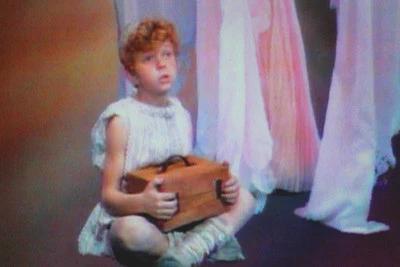
My childhood gift reminds me of Charles Tazewell’s classic tale, The Littlest Angel. It is the story of a small, youngest angel in heaven who struggled to fit in. The story follows a young boy who dies and arrives in heaven, but his rough-and-tumble nature means his halo is often dirty, and he struggles with heavenly etiquette, such as singing and praying. He feels lonely and out of place among the other angels. He was clumsy. His halo was crooked. His robe was always wrinkled. His wings never seemed to cooperate. Feeling overwhelmed and out of place, he longed for something familiar—something from earth.
He was eventually permitted to bring a small box of treasures he had kept as a little boy:
- a butterfly with broken wings,
- a dog collar,
- two smooth stones from a riverbed,
- a handful of beloved scraps.
To the great hosts of heaven, these objects were crude and unimpressive. But to the littlest angel, they were precious reminders of love, innocence, and home.
When the time came for every angel to present a gift to celebrate the birth of the Christ Child, the littlest angel shyly placed his battered box among the priceless offerings. Immediately, the other angels were embarrassed for him. The gift looked like an insult among the treasures of gold, jewels, and celestial radiance.
But then God looked upon the humble box. And He smiled.
For He saw what others could not: a sincere heart offering its very best.
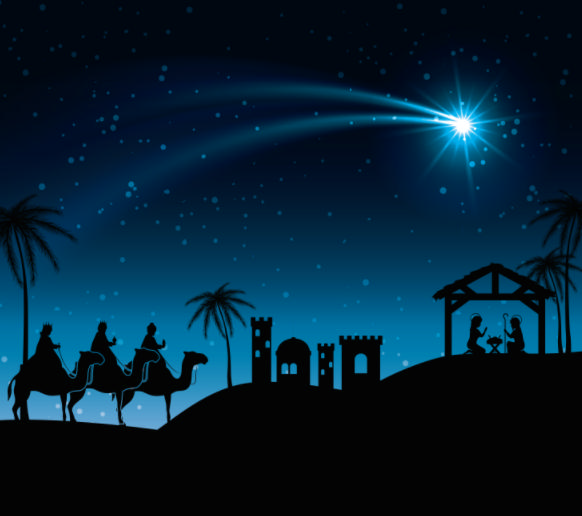
God declared the little box the greatest gift of all. And according to the story, He transformed that box into the star that shone over Bethlehem—the very star that led the wise men to Christ.
The smallest gift, offered with the greatest love, became a light for the world.
The Value of a Simple Gift
Both Mrs. Tucker’s encouragement and The Littlest Angel remind us of the same profound truth: The value of a gift is not determined by its polish, perfection, or price tag—but by the condition of the heart that gives it.
God delights in simple, humble gifts because they flow from a Spirit-shaped motivation to give. Whether it is a wooden bowl carved by a child, a battered box of earthly treasures, or the quiet generosity of a believer prompted by the Spirit—God sees what no one else sees. And He uses such gifts in ways far beyond what we could ever imagine.
We never know how the motivation to give will affect others—regardless of the size or condition of the gift.

Eddie Riley
Eddie Riley is the ADMINISTRATOR, SENIOR BIBLE Instructor for Cross Lanes Christian School, and has served in this position since 2013. He has faithfully ministered in Christian Education for over 40 years at schools in NC, AZ, FL, VA, NJ, and WV. Eddie holds a BA in Bible from Bob Jones University, and M.Ed. from West Coast Baptist College