Cardinal Institute Review of the West Virginia’s 2026 Legislative Session:
What We Fought For, What We Won, and What Comes Next
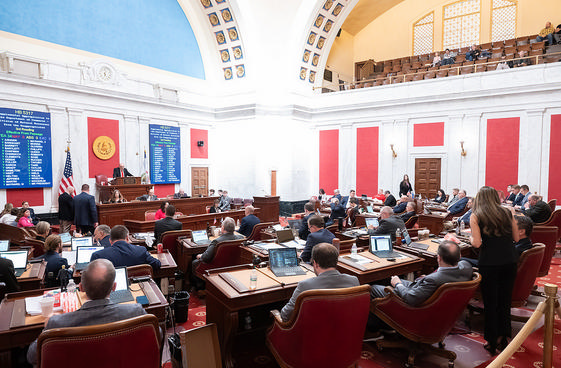
West Virginia’s 2026 legislative session is behind us.
My entire career has been rooted in West Virginia policy. As a 2019 Judith A. Herndon Fellow, I spent a semester working across both the State Senate and the Department of Health and Human Resources—drafting legislation, working alongside lawmakers, and tackling the issues that don't make easy headlines: foster care, homelessness, Medicaid. It was during my time in the Senate that the first school choice fight began, and where I was first introduced to the Cardinal Institute.
I graduated from West Virginia University in 2020 and went on to manage a statewide campaign, which we won in November. I joined the Cardinal Institute shortly after and simultaneously earned my Master's in Public Administration and Policy from American University. Today I serve as Chief of Staff, where I focus on the health policies that affect everyday West Virginians—particularly hospital policy—and write about what I find. My work has appeared in RealClear, the Washington Examiner, and The Spectator.
This was one of the most demanding sessions in recent memory—fast-paced, high-stakes, and consequential for families across the state. Here is an honest account of what happened, where Cardinal fit in, and where we go from here.
The Hope Scholarship Fight You Didn’t Fully See
Many people heard about the Hope Scholarship battle in House Finance. The proposed caps on scholarship amounts, testing mandates, geographic restrictions, stripped flexibilities. Most know how it ended: a narrow adjustment to the payment disbursement schedule, and little else.
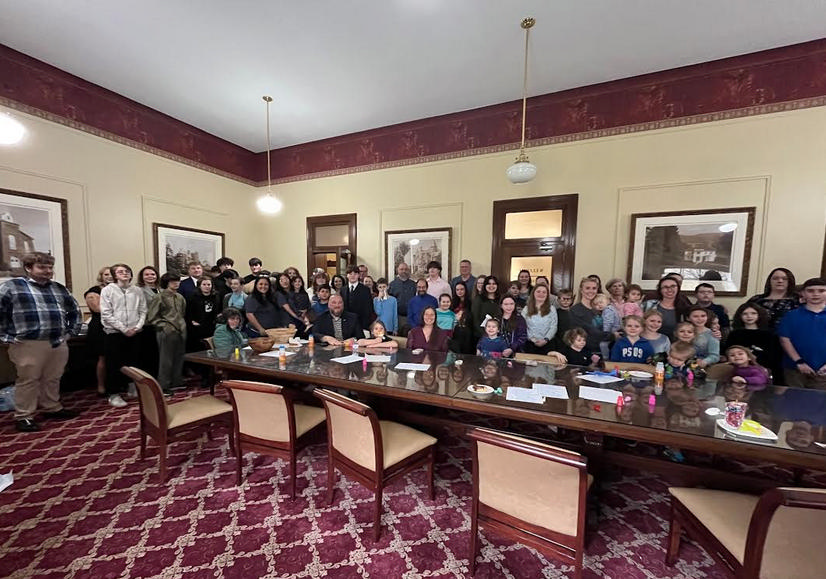
What’s harder to convey is what it actually looked like inside that process. The bill was placed on the committee agenda Friday morning. Then Monday morning. Monday evening. Tuesday morning. Tuesday evening. Parents kept showing up—with their kids—rearranging their schedules, sitting in committee rooms, waiting. The patience of everyone in that coalition was tested over and over again.
And then, finally, the sweeping changes were gone.
That outcome did not happen by accident. It happened because families showed up in numbers that were impossible to ignore, and because Cardinal’s years of research and public education had helped build an informed, engaged community whose voices were impossible to dismiss.
A Full-Circle Moment for School Choice
Just days after the guardrails bill was whittled down, West Virginia leaders gathered to celebrate something far larger: the Hope Scholarship’s expansion to universal eligibility for every K–12 student in the state.
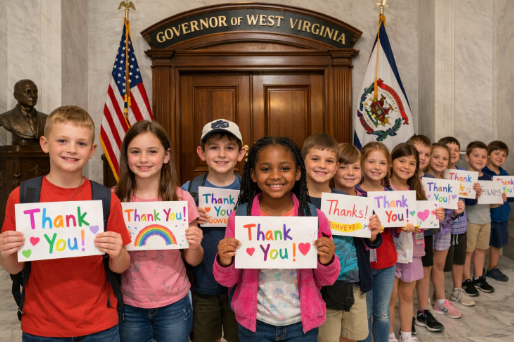
Treasurer Larry Pack captured the moment well: “This is a full-circle day.” He was right. Five years ago he was in the House of Delegates when Hope was first passed. Today, more than 14,000 students are enrolled for the 2026–27 school year—with over 3,000 signing up in the first 24 hours of open enrollment. Students in all 55 counties are now participating.
Senator Patricia Rucker, chair of the Senate Select Committee on School Choice, specifically acknowledged the partners who helped make Hope possible—including the Cardinal Institute. That recognition reflects years of research and relationship-building that rarely gets a headline, but quietly shapes what’s possible in this state.
Healthcare Policy: PBM Reform and Hospital Accountability
While the education fight dominated headlines, Cardinal was doing serious healthcare policy work that deserves equal attention.
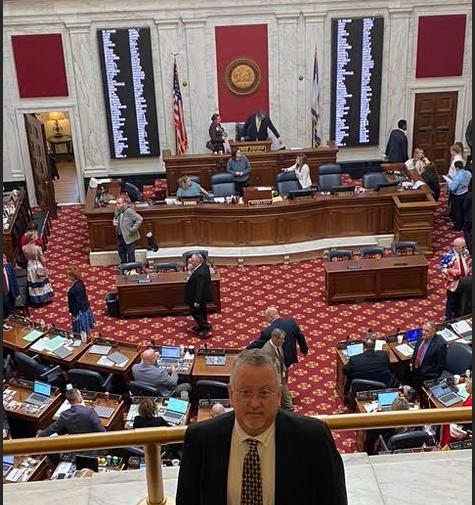
I presented to the West Virginia Senate Health Committee on pharmacy benefit manager (PBM) reform, sharing my research on how PBM regulation affects market competition. With PEIA budget pressures mounting, this conversation is only going to grow louder—and Cardinal is in the room with when it counts.
We also published our charity care paper this session, alongside research challenging the “poor payer mix” argument West Virginia hospitals have long used to deflect scrutiny on the state’s Certificate of Need process. That work received coverage in Yahoo Finance, WV News, and other outlets. The conversation around hospital accountability in West Virginia is shifting, and Cardinal is helping lead it.
WorkFIRST: A New Opportunity on Workforce Reform
As the session closed, Governor Morrisey announced the WorkFIRST initiative—a new taskforce to examine how the state delivers workforce and safety-net services, with the goal of aligning job training, employment programs, and assistance around a single purpose: getting more Mountaineers back to work.
This is precisely what Cardinal’s One Door to Opportunity research has been calling for. West Virginia’s labor force participation rate sits nearly 8 points below the national average. Our Dignity Project polling shows that West Virginians—including those who have used public assistance—overwhelmingly support reforms that make work the centerpiece of the system.
We look forward to bringing our research to the WorkFIRST Taskforce.
Building the Platform to Move Quickly
Since January 5th, Cardinal’s Facebook content views are up 2,713%. Post engagement has increased 4,471%. We’ve added 477 new followers—a 504% growth rate.
Those numbers are not abstract. When the Hope bill surfaced and families needed to know what was happening quickly, we had the platform to make that happen.
Reach is not separate from the policy work—it is part of it.
What Comes Next
The session ending does not mean things slow down. If anything, this is when longer-horizon work gets its moment.
We are deep into new healthcare research that will go further than anything Cardinal has published before—covering hospital billing practices, patient wait times, and access to care. The Hope Scholarship turns five this month, and we plan to mark that milestone with a clear-eyed look at what this program has meant for families and what it still has the potential to become. And we continue building the kind of organization that can do this work year after year, not just when session demands it.
The Cardinal Institute:
The Cardinal Institute has been the driving force behind the Hope Scholarship since before it had a name. Beginning in 2015, Cardinal commissioned the first ESA research paper in West Virginia's policy history, built the coalition of lawmakers, families, and national partners who made passage possible, and produced the research, messaging, and myth-busting materials that got legislators across the finish line. When the Hope Scholarship passed in 2021—the most expansive ESA program in U.S. history at the time—Cardinal was there. When it needed defending in 2026, Cardinal was there again. When Cardinal speaks on education in West Virginia, it speaks from a decade of doing the work
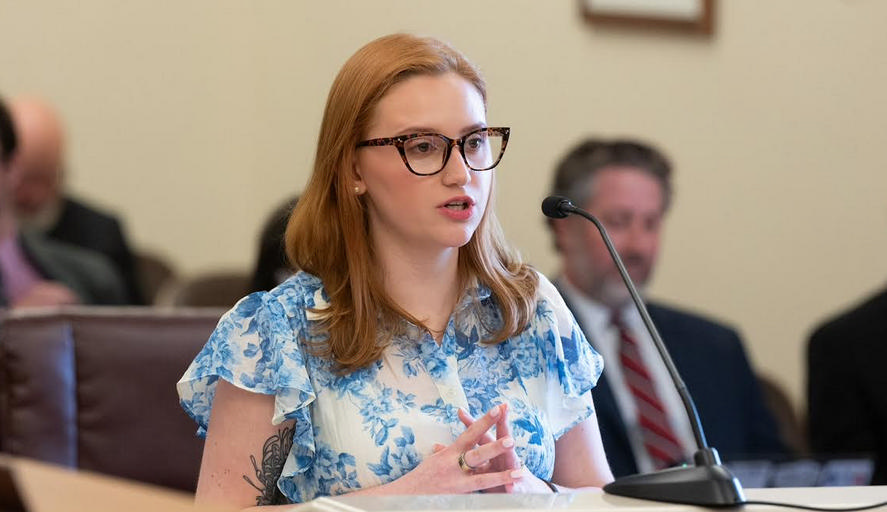
Jessica Dobrinsky
Jessica's entire career has been rooted in West Virginia policy. As a 2019 Judith A. Herndon Fellow, I spent a semester working across both the State Senate and the Department of Health and Human Resources—drafting legislation, working alongside lawmakers, and tackling the issues that don't make easy headlines: foster care, homelessness, Medicaid. It was during my time in the Senate that the first school choice fight began, and where I was first introduced to the Cardinal Institute.