
Make Math Learning Fun
From Challenge to Confidence

What memories do you have from math class? Do you remember participating in fun, engaging lessons? Or was math class always the longest part of the day? Regardless of how old your student is, math can be fun for all ages.
By using fun learning strategies, math can be memorable instead of miserable. Why do so many kids (and adults) fear math? Some people may have experienced a stigma that you have to have a certain quality to be “good at math.” Traditional learning methods can focus on memorization over meaning. This can lead to anxiety, frustration, and the belief that being “bad at math” is normal.
Classifying people as “good” or “bad” at math isn’t helpful. Instead, you can create an environment of curiosity. As a homeschool parent, you can turn math into a subject that excites your student. A homeschool environment provides the flexibility to use multiple learning strategies. You can tailor these strategies to your child’s unique needs by shaping math to fit your child’s learning style.
BJU Press Math emphasizes concept mastery, hands-on engagement, and biblical truth. Its step-by-step structure nurtures curiosity, confidence, and fun. Together, we can help students see math as part of God’s beautiful order.
How To Make Math Fun
Here are 7 tips that can apply to students of all ages.
1. Emphasize connection over correctness.
This means to celebrate exploration. Wrong answers don’t need to be viewed as a failure. You can use these opportunities to shape understanding of a problem. Regardless of age, students should always practice showing their work. Often, the journey, rather than the destination, is the most important part of a math problem.
When working with your student, use open-ended questions to shape the learning environment. Keep math conversational by asking questions such as “What do you notice?” or “What do you wonder?” Have your student explain a process out loud. This way, a student is more likely to have a stronger connection to the material.
Math mistakes can also happen in real life. Ask your student to try to find examples of bad math in the real world. Everyone makes mistakes, but not everyone will respond in the same way. Math comprehension is key to long-term success.
2. Use play as a learning tool.
Every age learns better through play. Use fun math games, puzzles, and creative challenges to shape your student’s math learning. BJU Press Homeschool integrates hands-on activities and visuals that make lessons feel like play, not pressure.
Students also benefit from different types of learning environments. Many learning strategies involve auditory and visual learning. Kinesthetic learning can help all learners, too. Use either virtual or physical manipulatives to connect concepts. Students of all ages can use manipulatives to aid learning.
3. Focus on real-life relevance.
Math shows up everywhere—in cooking, building, nature, and art. These concepts are linked to God’s design. We can see patterns in creation, order in structure, and balance in beauty.
When working on word problems, many students may benefit from drawing a picture. This can help students connect abstract math concepts to real-world applications. It may also be helpful for students to look at math like learning a new language. Students need to be able to translate from word phrases into numbers or symbols. By re-evaluating math as an abstract concept, students can reshape how they solve a problem.
4. Adopt a growth mindset.
Emphasize that math ability grows with practice and persistence. BJU Press Math review ensures consistent success, helping students enjoy visible progress. Emphasize to students that it is important to check their work. Have students ask themselves, “Does this answer make sense?” or “How can I use this information?” Estimation is a valuable tool for checking the reasonableness of an answer.
5. Learn your basic facts.
Understanding math facts is an important skill for students of all grades. First graders will practice addition facts. Then middle schoolers will use those facts to add fractions. Elementary courses emphasize math facts. This is because math facts lay the foundation for higher-level math courses. Find helpful resources for reviewing math facts and speed drills on AfterSchoolHelp.com.
Also, remember to create a positive learning environment. For example, if your student struggles with timed math facts, create a base time for a set of math facts. Then your student can compete against this baseline score to try to achieve a better time. By competing against their own score, you can ease students’ comparison anxiety.
6. Stay organized.
The many numbers, symbols, and equations spilling across math pages may overwhelm students. Or maybe your student scribbles work on a scrap sheet of paper, but then can’t defend an answer or process when questioned. By keeping math work and papers organized, students can have a point of reference. Some students may benefit from completing homework in a table format. Table gridlines can help students organize information for each problem.
7. Review often.
Math doesn’t need to occur only at a certain time each day. Math is everywhere. Try using physical flashcards, learning apps, or math facts as a portable playground for math. By reviewing often, you can sharpen your student’s math skills wherever you go. Students will benefit from continual review. They may need to play the same games to learn a skill or to complete a review activity as part of their daily routine. Even a trip to the grocery store can turn into a learning experience.
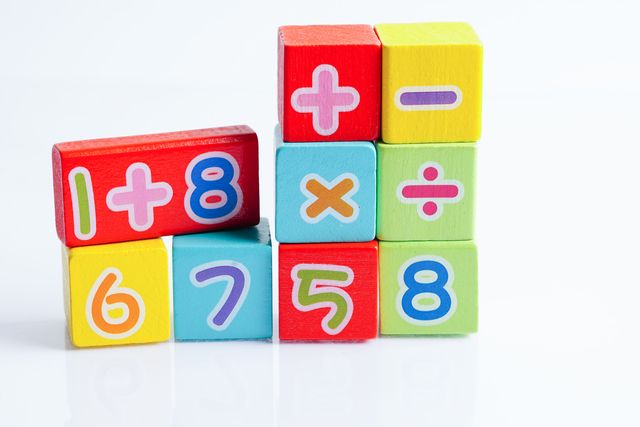
How can you make learning math fun based on your student’s age?
Math class should be fun, not frustrating. When math anxiety creeps in, use fun math games, visuals, and simple practice to reduce stressors. Creating memories with math material can strengthen students’ understanding. By using BJU Press Homeschool’s scaffolded lessons, students can master the material.
Early Childhood (Ages 3–7): Build curiosity & comfort. Use stories, songs, and bright visuals from BJU Press K3–K5 Math to connect math with joy. Keep sessions short and playful. Use snack-time math (e.g., “If we have 6 crackers and eat 2, how many are left?”). Celebrate discoveries, not just answers.
Elementary (Ages 8–12): Connect math to the real world.
Bring math to life with BJU Press Math 1–5 projects. Have students measure a recipe, track weather, or build simple models. Let kids explain how they solved a problem to build confidence. Integrate math into chores or hobbies (e.g., “How much paint do we need for the fence?”).
Middle School (Ages 13–15): Foster independence & application.
Encourage ownership with BJU Press Math 6, Fundamentals of Math, and Pre-Algebra. Connect math to real-life problem-solving and personal goals. Students can measure ingredients, compare prices, or track family trips. Students can even do math-related projects, like budgeting for a small event or designing a mini-business.
High School (Ages 16+): Empower with purpose.
Let BJU Press Algebra 1 & 2, Geometry, Precalculus, and Consumer Math prepare students for real-world success. Teens can design projects that matter to them. These include budgeting for college or designing a business logo. Discuss how math reveals God’s logic and creativity in professional fields.
Math helps students delight in how God designed our beautiful world. BJU Press Homeschool weaves biblical worldview principles throughout its math materials. The curriculum introduces students to ideas that not only shape their math skills but can also shape their worldview.
BJU Press Homeschool Resources
BJU Press Math Curriculum (preschool–grade 12): Concept-focused, hands-on, and faith-driven
- Teacher Editions: Ready-to-play games and extension activities for every lesson
- Manipulatives Kits: Abstract ideas made visual and interactive
- Online video lessons through BJU Press Homeschool Hub: Engaging instruction from video teachers
- AfterSchoolHelp.com Math courses with videos and activity questions for review help
- Speed drills for practicing addition, subtraction, multiplication, and division math facts
- Virtual Manipulatives: Use virtual manipulatives to understand a concept.
- Toy Theater: Play fun, interactive math games for elementary students.

BJU Press Writer
This post has been written by a BJU Press team member. If you have any questions regarding this post, please direct them to [email protected].