Monk or Missionary?
Reflections from Greece
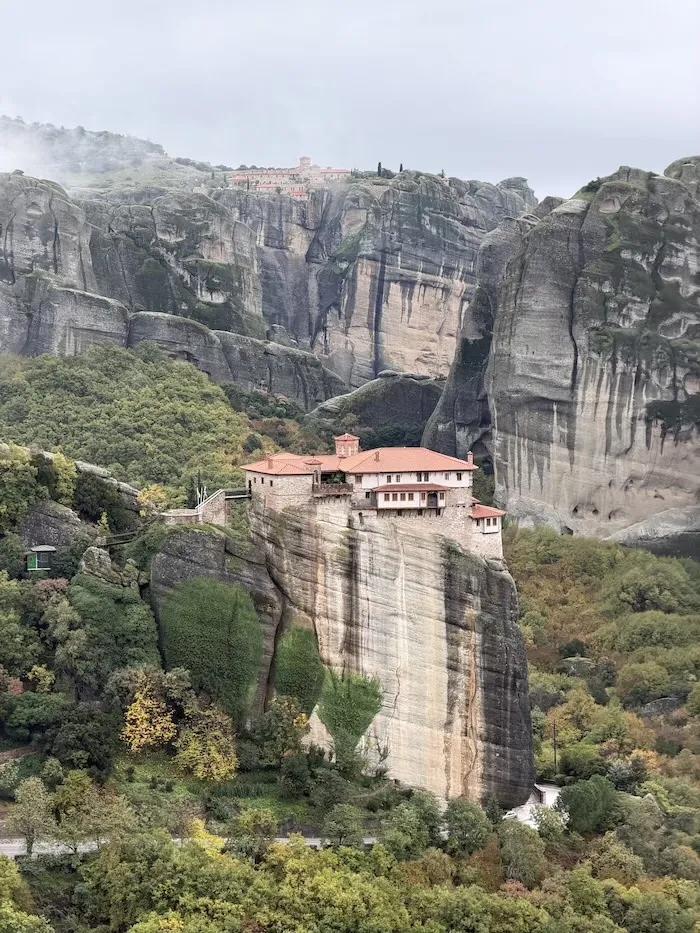
Meteora Monks
While in Greece, I’ve had the incredible opportunity to visit several ancient monasteries, such as the Holy Trinity in Meteora, which dates back to 1440.
Standing at the base of those towering cliffs, I couldn’t help but wonder how those monks ever made their way up and why. Why would anyone climb a rock wall just to live in isolation? Their answer was simple: safety and solitude. The word monastery actually comes from the Greek word monos, meaning alone. A hermit who lived there received his name from the Greek word eremites, meaning “of the desert.” Their goal was to be like Christ in Matthew 4. Alone, away from the world, like Jesus was in Matthew 4.
And honestly, I get it. There are moments in ministry when retreating to the solitudes sounds pretty tempting. But what many of those monks forgot is that Jesus was only in solitude for forty days, and even then, He was not alone; Satan was ever present.
The Missionaries Model
That contrast from the monks in the monastery to the greatest missionary could not have been more obvious, as I traced the steps of the Apostle Paul.
As you travel through Greece, the footprints of Paul are everywhere. His life was not lived in isolation; it was lived among people. Through his letters, you feel his love for the churches. He had the church at Philippi in his heart. He loved Timothy like his son. But his passion wasn’t just for the people of God; it was for people who needed God.
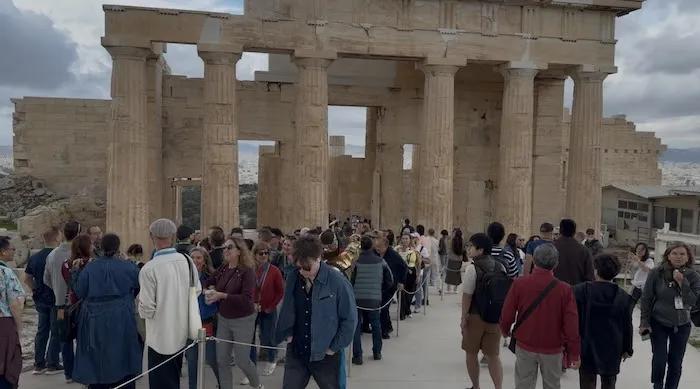
Driving for hours through small Greek towns, stopping for a cheese or spinach sandwich or stretching our legs, you quickly notice that history lies just below the surface. Paul could have been here. He might have had a sandwich (probably from a bull offered to idols). Yet he does not write to them. He does not stay to minister to them. Why? They were missing something. Paul was looking for a forum. He wanted a large gathering of people.
Paul’s Path
Paul travelled thousands of miles, 30,000 or more to be exact. He did this to avoid what the monks were trying to achieve. He was not seeking solitude, but rather lost souls who needed the Savior. He wasn’t a theologian shut away in a study; he was a man on the move. He was a practical person who was perhaps more influenced by his surroundings than the reverse.
Wherever people gathered, Paul went.
When philosophers debated in Athens, Paul was there.
When Lydia prayed by the river, Paul found her.
When the Isthmian Games came to Corinth in AD 51 and thousands from around the world arrived to watch, Paul was there too. In fact, we know he stayed with Aquila and Priscilla, tentmakers he likely met when he went to purchase a tent for himself. God turned that simple purchase into a powerful partnership in life and ministry (Acts 18).
Paul didn’t follow a rigid plan or program for reaching people. His methods changed from city to city, because the people changed from place to place. The Philippians were poor, while the Corinthians were very wealthy. His mission wasn’t about the method; it was about the message.
The Cliffs or the Crowds?
So here in Greece, standing between the cliffs of the monks and the roads of the missionary, I’m reminded of this:
Jesus did not call us to be eremites, but to engagement.
Jesus does not want us to hide in cliffs, but to make our way to the common place.
We are not called to isolation, but to integration as we walk among those without.
Don’t follow the way of the monk, but follow the missionary!

Treg Spicer
Treg Spicer is the Senior Pastor of Faith Baptist Church in Morgantown, West Virginia. He also hosts the Art of the Assistant Podcast. You can find more of Treg's content at his website, tregspicer.com.