Speaking the Truth in Love
Strengthening Communication Between Christian Schools and Families
On October 24, 2025, K–12 Dive published an article summarizing research from Learning Heroes that raised concerns about what it called a “perception gap.” In short, many parents believe their children are doing well academically, while objective measures sometimes suggest otherwise. The report encouraged schools to improve transparency, simplify educational terminology, clarify performance data, and create stronger opportunities for parent-teacher connection. Those concerns deserve thoughtful consideration. When parents and schools are not seeing the same academic picture, the result is often confusion. And confusion, when it lingers, can quietly allow a student to fall behind. Families who don’t clearly understand where their children stand cannot offer timely support at home. Clarity, in that sense, is not simply administrative housekeeping. It is an act of care that ultimately serves children.
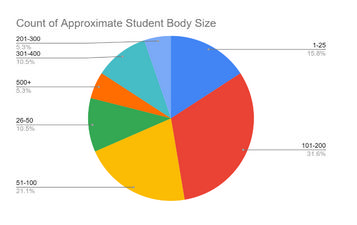
At the same time, it is important to speak from within our own context. In Christian schools, particularly smaller independent schools like many of ours in West Virginia, communication has changed significantly over the past decade. To better understand what is happening in our setting, we surveyed Christian schools across the state. The schools represented ranged from campuses serving only a few dozen students to programs approaching two hundred students, giving us perspective across a meaningful spectrum of school sizes and structures. What we found was encouraging. While no school would claim perfection, most are working deliberately to strengthen communication with families. This is an active and intentional attempt to partner with parents and increase understanding and visibility.
Communication Today: Ongoing, Not Occasional
One concern raised in the national discussion is that report cards alone can send mixed signals. A quarterly grade often blends effort, participation, homework completion, and assessment performance into a single mark. Without explanation, that mark can be difficult to interpret. If the report card is the primary source of information, misunderstanding becomes much more likely. There is also a practical difficulty in relying solely on quarterly reporting. When a concern becomes clear only after nine weeks have passed, a significant portion of the academic year is already gone. Helping a student recover lost ground after a full quarter has elapsed is far more challenging than addressing a concern in the early weeks. Earlier clarity allows earlier intervention, and earlier intervention is almost always more effective.
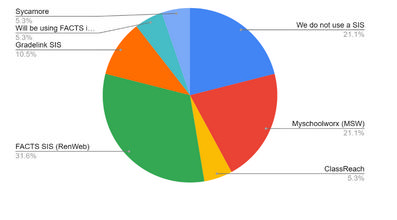
In our survey, nearly seventy-nine percent of responding schools reported using a formal Student Information System such as FACTS, MySchoolWorx, Gradelink, ClassReach, or Sycamore. These systems allow parents to view grades, assignments, attendance, and often teacher feedback in real time. In addition, almost nine out of ten schools hold regular parent conferences. Many also use online portals, newsletters, phone calls, text alerts, and messaging systems to maintain steady communication. In most of our schools today, communication is no longer limited to a printed report every nine weeks. It is continuous. That continuity matters because trust is rarely built in large moments alone. It grows through steady access and consistent clarity. When parents can see weekly progress and know they can reach a teacher without navigating layers of bureaucracy, partnership becomes natural rather than reactive.
The Perception Gap: A Reality We Must Address
When asked directly about the perception gap, approximately 63 percent of school leaders in our survey acknowledged that they have seen it within their own communities. This honesty is important. It tells us that this isn’t merely a national headline or a problem “out there,” but something we must thoughtfully address within our own halls and classrooms. It also tells us that we recognize issues within our own walls. We are grateful for leaders who are willing to speak candidly, because real improvement begins with a clear-eyed understanding of where we stand. Most of us have seen situations where parents rely primarily on what their child reports about school. We have seen effort mistaken for mastery and genuine confusion about grade-level expectations. And I would say, I don’t think any of this is malicious, it is simply human.
Recognizing this gap should not discourage us; it should clarify our responsibility. If misunderstanding exists, WE must communicate more clearly. If expectations are vague, WE must define them carefully. If report cards blend categories in ways that blur the distinction between effort and proficiency, WE must help families interpret them wisely. Today, most SIS’s have systems to allow the parents to see the different categories that go into a “grade” for their student. This information allows them to better assess where a student really is. All of this contributes to stronger School/Teacher/Parent relationships. I would say, though, that while strong relationships may not automatically eliminate confusion, but they can provide a healthier environment in which that confusion can be addressed.
The Gift of Personal Conversation
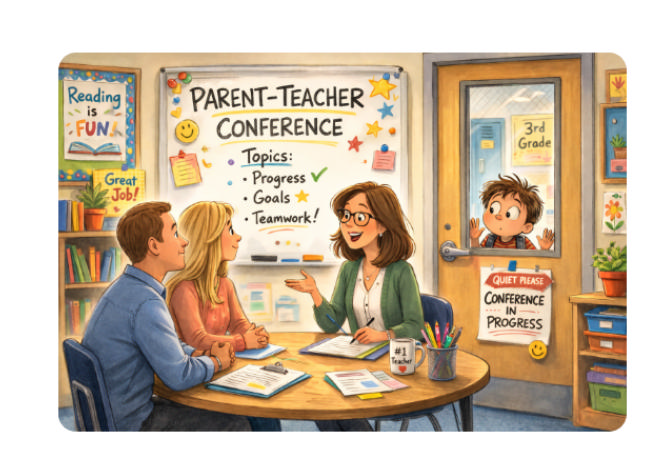
One of the most encouraging findings from our survey was that every responding school offers one-on-one meetings with parents to discuss student progress. In our context, conferences are not just mere formalities, they are conversations and partnership. Teachers sit with parents and walk through grades, strengths, and areas for growth. They outline practical next steps and answer questions directly. Often, hopefully, these discussions occur before a situation becomes too serious. This is one of the quiet strengths of Christian education. Many of our schools are smaller, and administrators are accessible. Teachers often know families personally. Communication does not need to pass through multiple offices before reaching the right person. Technology allows us to share information efficiently, but trust is built face to face. Meaningful conversation prevents misunderstanding and strengthens partnership in ways that no digital platform alone can accomplish.
Communication Rooted in Mission
When school leaders were asked how strongly their Christian mission influences communication practices, the average response was 4.68 out of 5, highlighting the conviction with which Christian schools operate. In Christian education, parents are not simply customers, the school, the teacher, and the parents are partners. We are entrusted together by the Lord with the growth of children. Communication, therefore, cannot be merely procedural. When we discuss academic progress, we are also discussing diligence, perseverance, responsibility, and character. We are shaping minds and hearts. Clarity becomes a moral responsibility rather than simply an administrative preference. Honesty and transparency serve students and honor families. This partnership between the school and parent strengthens educational and spiritual outcomes. When difficult conversations arise, shared faith and purpose provide common ground.
Walking With Families Through Learning Challenges
The national report also highlights the complexity families face when navigating learning differences and academic challenges. We in Christian Education recognize that difficulty. Many of our schools provide tutoring, intervention resources, and written explanations of assessment results. Many conferences include careful discussion of individual learning plans to support a student. Most schools send early notifications when a student begins to struggle so that families are not surprised at the end of a grading period. While we may not always have large departments devoted solely to learning support, we often have something equally valuable: accessibility. This allows teachers to respond quickly and make adjustments can be made without excessive delay. Administration is easily contacted by both teacher and parent allowing quick implementation of plans and goals. What ultimately matters is not the size of the institution but the clarity of communication and the willingness to act early.
From Information to Understanding
When leaders rated the effectiveness of their current communication systems, the average score was 3.79 out of 5. That suggests confidence, but also humility. We believe we are doing well, yet we recognize there is room for growth. Providing access to grades is only the beginning. Parents must also understand what those grades represent, needing clarity about benchmarks, assessment categories, and even long-term expectations. We can continue improving by explaining grading frameworks more clearly, offering informational sessions about testing and evaluation, and refining digital platforms so they emphasize understanding of mastery and growth rather than simple point accumulation. Communication is not static. It requires ongoing attention and intentional refinement.
A Holistic Approach
In many of our schools, communication is not separated from the broader life of the school community. Conversations about attendance, behavior, spiritual growth, and academic progress often occur together because we see students as whole persons. As it has been said “When attendance declines, we call. When grades slip, we meet. When things improve, we celebrate.” Communication is woven into daily school life rather than treated as a special initiative. That holistic approach reflects our conviction that education is formation, not merely information.
Secondary Years: Clarity Matters Even More
As students move into the secondary years, clarity becomes even more essential. Parental involvement sometimes decreases during high school, yet those years carry some of the most significant academic decisions. Families need clear guidance regarding graduation, college, and scholarships. They need to understand how present performance influences future opportunities. One strength of many K–12 Christian schools is continuity. We often work with families for many years, and that long-term relationship provides a strong foundation for honest guidance during more complex secondary seasons.
An Encouraging Opportunity
The broader national conversation about family-school partnership is important. The perception gap is real, and clear communication matters. Yet, this is not a moment for defensiveness. It is an opportunity for thoughtful refinement. As we have seen, Christian schools already possess meaningful strengths: relational accessibility, regular conferences, growing digital access, and a mission-driven commitment to partnership. We are not beginning from nothing. We are building on a solid foundation.
Moving Forward Together
As leaders, we must continue examining our own practices. Do our parents truly understand what mastery looks like at each grade level? Are we clearly distinguishing between effort and proficiency? Are we communicating early enough when concerns arise? Are we giving teachers adequate time to connect meaningfully with families? We should pursue this work not because a report demands it, but because our calling does. Scripture reminds us to be “speaking the truth in love” in Ephesians 4:15. That balance of clarity and compassion should shape how we communicate with the families entrusted to us. Clear communication strengthens trust, trust strengthens partnership, and partnership strengthens students. For those of us serving in Christian schools across West Virginia and throughout the nation, this is an opportunity to lead faithfully, combining relational warmth with academic clarity so that families feel informed, supported, and united in purpose. And that is work worth doing.
Link to Original Article : https://www.k12dive.com/news/10-ways-to-strengthen-family-school-partnerships-academics-social-emotional-learning/803609/?utm_source=Sailthru&utm_medium=email&utm_campaign=Issue:%202025-10-24%20K-12%20Dive%20%5Bissue:78132%5D&utm_term=K-12%20Dive
Link to Full Survey Results: https://docs.google.com/spreadsheets/d/1xwvmCigvnLfLwA2ZGOi-pAiGxXeRCHbnLabMQ3HT0Nw/edit?usp=sharing

Christopher Knotts
Originally hailing from Kalispell, Montana, Christopher Knotts’ career is marked by his roles as an Administrator at Morgantown Christian Academy and IT consultant and administrator for Faith Baptist Church. With a passion for education, he has dedicated years to teaching such classes as Chemistry and Computer Science. He couples this with his natural love for all things electronic, diving deep into many different technological topics such as AI and VR.