Use Your Imagination & Become Part of WV History
WV Department of Tourism Invites You to Write an Essay to Imagine WV in 2276 and Have in Preserved in a Time Capsule in Philadelphia
Imagine standing in West Virginia 250 years ago.
There are no highways. No phones. No electricity. The land is thick with forest, rivers cutting through valleys, and trails barely wide enough for a horse. The Ohio River moves steadily west—quiet, powerful, unknown to most of the world beyond it.
Now imagine a young man moving through that wilderness.
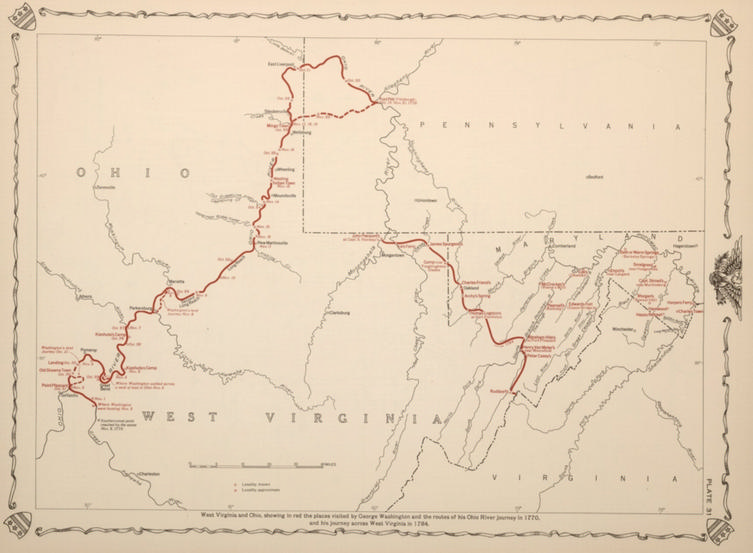
In the 1750s, a 20-something surveyor named George Washington traveled through this very region—down the Ohio River, through lands that would one day become West Virginia. He wasn’t a president yet. He wasn’t even a general. He was measuring land, mapping rivers, learning the terrain, and seeing firsthand the vast potential—and danger—of the American frontier.
He walked where there were no roads. He crossed rivers with no bridges. He imagined a future that didn’t exist yet.
That same man would later stand at the center of a revolution and help give birth to a nation.
Now step back and think about that moment.
Before there was a United States… before there was a Constitution… before there was even a clear idea of independence… there were just people—exploring, risking and imagining what their lives could become.
Fast forward to 1776.
A group of those same kinds of people signed the Declaration of Independence. They had no certainty. No guarantee. They were declaring something bold: that freedom was worth everything.
Now fast forward again—to today.
You live in a world those men could never have imagined. Information travels instantly. You can speak to anyone, learn anything, go almost anywhere. The Ohio River is no longer a mystery—it’s mapped, navigated, and surrounded by communities, industry, and history.
West Virginia itself tells that story. From untouched wilderness to a state known for strength, resources, and resilience. Coal—formed over millions of years—became one of the fuels that powered America’s rise, lighting cities, driving industry, and shaping generations.
And now, you are being asked to do something just as bold in a different way.
The WV Department of Tourism has announced the 2026 “Letters to Our Founders” essay contest to honor the 250th anniversary of the Declaration of Independence. Students across West Virginia, grades 8 through 12, are invited to write letters to America’s founders—reflecting on the past 250 years and imagining the next 250.
But this is more than a contest.
The winning essay will be printed on archival paper and placed inside America’s Time Capsule—a vessel engineered by scientists at the National Institute of Standards and Technology, preservation experts at the Library of Congress, and coordinated with the National Park Service. It will be buried at Independence National Park in Philadelphia on July 4, 2026… and not opened until 2276.
Think about that.
Your words could outlast you by 2 Centuries.
Someone in the year 2276—living in a world you can barely imagine—may read what you wrote. Just as we look back at Washington traveling the Ohio River, they will look back at you.
So what would you tell them?
Would you describe a world of constant connection and rapid change? Would you explain the challenges—division, technology, uncertainty? Would you talk about opportunity, faith, responsibility?
And then ask yourself this:
What will their world look like?
Will rivers like the Ohio still define geography—or will technology redefine distance entirely? Will energy still come from the ground, like coal, or from sources we haven’t discovered yet? Will West Virginia still be known for its natural beauty, or will it become something entirely new?
More importantly—will the ideas that started in 1776 still matter?
Will freedom still be valued? Will courage still be required? Will people still have to choose what kind of future they want to build?
Because that’s the real connection between then, now, and what comes next.
Washington didn’t just travel a river—he was stepping into the unknown.
The Founders didn’t just sign a document—they were shaping a future they would never see.
And now, you are being asked to do the same.
This contest challenges you to do three things:
Look back — to understand what has been built.
Look around — to recognize the world you are living in.
Look forward — to imagine what comes next.
Essays must be submitted by April 15, 2026, with required word counts depending on grade level. Strong entries will include clear structure, well-supported arguments, and proper APA citations, with encouragement to use primary sources.
Winners will receive recognition, be featured in state promotions leading up to July 4, 2026, and the top five essays will be published on the Goldenseal website.
But one essay will do something more.
It will be sealed away for 250 years.
A message from today… to tomorrow.
So when you write, don’t just think like a student.
Think like that young surveyor moving down the Ohio River—seeing something no one else fully saw yet.
Think like those who signed the Declaration—willing to risk everything for an idea.
And then think about the person who will read your words in 2276.
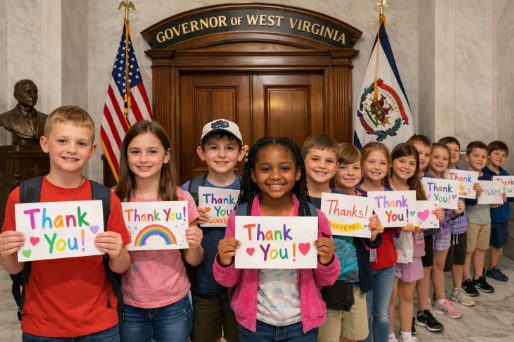
What will they thank you for?
What will they wish you had done differently?
And what will your words tell them about who you were—and what you believed America could become?
Write that.
Essays must be submitted online by April 15, 2026.
Word Count: Minimum of 500 words (8th grade), 750 words (9-10th grades), or 1,000 words (11-12th grades).
Essays that do not meet the minimum requirements will not be considered.
Essay Planning: Essays should have an introduction, body, and a conclusion. Arguments are clearly made and well supported by clear, consistent citations. Please use APA format for all citations. Primary sources are encouraged.
Prizes will be awarded to the top entry from each grade level, and winners will be featured in official state promotions leading up to July 4, 2026. Additionally, the top five essays will be featured on the Goldenseal website, one of the state’s most treasured publications. Participants are encouraged to connect their essays, specifically the sections that address the vision for the future, directly to West Virginia.
To Submit Your Essay Click here
Chelsea Ruby
Chelsea Ruby is the Cabinet Secretary for the WV Department of Tourism.