What is the greatest gift parents can give to their children?
Called to Rescue: Faith, Education, and the Hope Scholarship
The Lord’s Prayer begins with words so familiar that it is easy to rush through them without reflection: Our Father, who art in heaven.
Yet those opening words are not incidental. They are deliberate, and they shape everything that follows. God reveals Himself first not as ruler or judge, but He is named as Father. And like any good father, His posture toward His children is love. He sent His only begotten Son on a rescue mission to save us from sin and death and to invite us to His table. We are called children of God because we have been adopted into the Kingdom by a good and loving Father whose very nature is grace.
When you become a parent, that posture begins to make sense instinctively. You discover a love that is fierce and self-giving. You would do anything for your children. What parent would hesitate to rush toward danger to protect their child? Love, by nature, compels action.
From that love flows one of our highest callings as parents: to care for, form, and educate our children. Education is not merely academic preparation; it is formation. The greatest gift we can give our children, second only to faith itself, is an education that equips them to navigate life with wisdom, virtue, and confidence.
For more than a century, American families entrusted public schools with that sacred responsibility. For a time, that trust was well placed. Public schools were widely understood as partners with families and communities, reinforcing shared values while providing a strong academic foundation. It was reasonable to believe that our children were safe and well-formed within those classrooms
But times have changed.
Trust in public institutions is at a historic low, and not without cause (1) . As followers of Christ, we can no longer assume that the values taught in public schools align with the virtues of our faith. Too often, parents encounter poor academic outcomes, ideological indoctrination, hostility toward religion, and environments that are neither physically or morally safe for children. Many families now find themselves on an unexpected rescue mission, aware of the danger yet lacking the means to act.
That is precisely why the Hope Scholarship matters.
In West Virginia, the Hope Scholarship restores something essential: the ability of parents to live out their God-given responsibility to educate their children according to their convictions. It does not mandate a particular path. It simply removes a financial barrier that once made alternatives available only to the wealthy. In doing so, it affirms a simple truth: parents know their children best and are best positioned to act in their interests.
In that sense, the Hope Scholarship is one of the greatest gifts West Virginia could receive. It offers an exit from systems that have become hostile to faith and family. It is a restoration of rightful authority. It transforms hope from an abstraction into something practical and actionable.
God sent His Son on a rescue mission for us. As parents, we are called to do no less for our children.
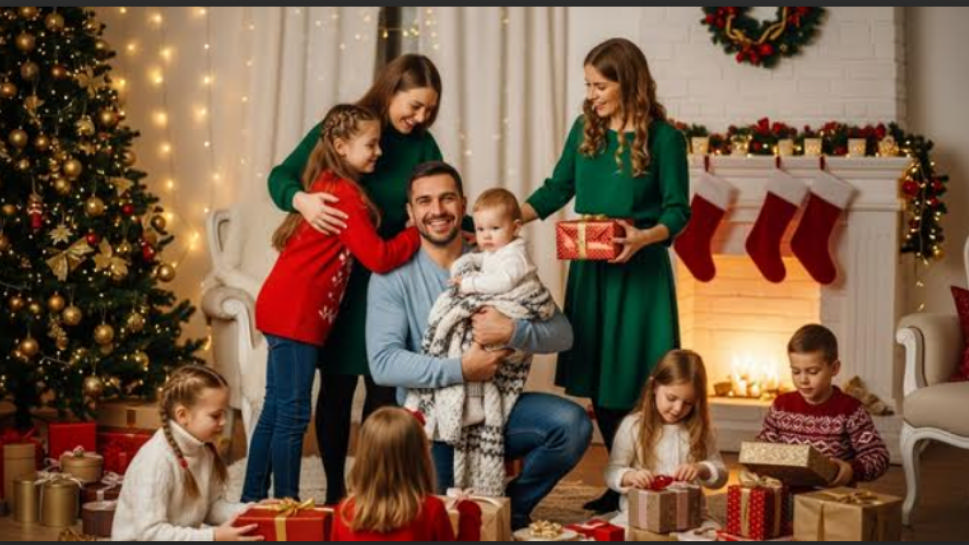
This Christmas season, as we celebrate the coming of Christ and the salvation He brings, it is worth remembering that not all gifts arrive wrapped in paper and bows. Some come in the form of freedom, agency, and renewed responsibility.
Our children deserve more than what too many public schools currently provide. Perhaps a day will come when those institutions regain the confidence of families and followers alike. Until then, we should cherish and defend the gift we have been given in the Hope Scholarship, and use it faithfully for the sake of our children.
What is the Gift? Beginning the 26-27 school year, all parents of K-12 West Virginia students will be able to choose where their children are educated and the Hope Scholarship will invest approximately $5500 per child toward that education. Let’s make this fact perfectly clear: the amount of money that West Virginia invests in the Hope Scholarship does not come from public education money; it's a budget item over, above and separate from public education dollars.
Starting in the 2026–2027 school year, every parent of a K–12 student in West Virginia will have the freedom to choose where their child is educated. Through the Hope Scholarship, the state will provide approximately $5,500 per student to support that choice.
Let’s be absolutely clear: this funding does not come from the public education budget. The Hope Scholarship is funded separately—it is a distinct line item in the state budget, above and beyond the dollars allocated to the traditional public school system.
The West Virginia State Treasurer’s Office will begin accepting Hope Scholarship applications for the 2026–2027 school year on March 2, 2026.
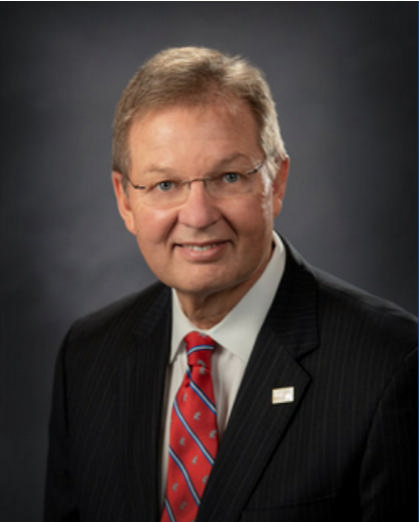
Does the Hope Scholarship work? Please read what West Virginia State Treasurer Larry Pack said last July (2):
“With the Hope Scholarship application period underway, we at the Treasurer’s Office expect the number of participating students to increase this fall. Currently, we have about 10,500 students enrolled within the program and expect that number to nearly double for the 2025-2026 school year. That means about 7% of school-aged children in West Virginia will be participating in the program. Nearly 15,000 applied for full funding of the scholarship for the 2025-2026 school year.
For those who support options in education, this is huge news. But numbers alone can’t tell the whole story. It is the impact on families that my team and I have seen first-hand that really makes supporting this program worthwhile.
In Williamstown, we met with the Executive Director of the Wood County Christian School. The school has been around for over 30 years but has seen growth due to the Hope Scholarship. They even have families who have moved from Ohio to take advantage of the program. Anything that entices families to move to our state is a good thing.
In Princeton, we saw the expansion of a school at the Summit Christian Academy. The leadership team there plans to add an elementary school in addition to their already existing 5-12 grade program.
What touched our hearts the most was hearing from a grandmother who had enrolled her granddaughter to school. She said she begged the leadership at the Summit Christian Academy to see if her granddaughter could attend and even offered to make payments. But when the principal shared information about the Hope Scholarship, tears flowed from her eyes.
Providing more educational opportunities like this is the foundation of this program.
In South Charleston, the first ever micro-school in the Mountain State, Vandalia Community School, is reimagining schooling much differently than the traditional environment to meet the needs of their students. Their staff has focused learning around smaller group settings which help those children flourish, especially for those with dyslexia. This shows when we let innovation rein, we put control back into the hands of families by focusing on individualized learning.
As a father of six children, I know first-hand how important it is for parents to have options when it comes to education. My children all had different needs when they went to school. One size does not fit all. But I can tell you expanding school choice is not enough. We must continue to tailor education towards the child especially for those who remain in the public school system.
That is why as lawmakers discuss potential innovations for our public schools, we must focus those conversations on a few things.
First, we have to deregulate teachers by giving them more control of their classrooms. By removing the restrictions that hold teachers back and allowing them to determine the best way to meet the needs of their students, we can provide greater flexibility that leads to better results for children, as well as our ability to retain and attract new teachers.
Second, we must return authority back to local decision makers. Over the last several decades, the government has grown out-of-control, becoming too big and too centralized. President Donald Trump is already doing his part by getting rid of the U.S. Department of Education and sending authority back to the states. At the state level, we must do something similar by pushing control of public schools to our local districts. We must examine the extensive statutory provisions that currently regulate public education and limit the ability of local districts to decide how to best serve students.
For years I have heard the term “local control” when it comes to public education, but now is the time for the Legislature to actually make meaningful reforms that permit local districts to make impactful decisions.
If we succeed in steps one and two, then we can focus on education innovation that tailors to the needs of the student. This will further empower parents, educators and students to find the right education for every child. Parents are the primary educators of their children for all things. They should be the ones who are allowed to make choices.
It’s obvious people all over the state have a passion for educating children. It now falls to lawmakers to harness that passion by continuing to free up rules and regulations leading to an education revolution. Because at the end of the day, this is all about ensuring we put students first”.
The gift is available to ALL West Virginia parents. To receive the gift, all you need to do is click this link to register your children New Students
Citations

Tiffany Hoben
Tiffany is the Director of Education Partnerships and Strategy for the Cardinal Institute. She brings in-depth knowledge of Civics and Government, along with possessing expertise in instructional materials review and state policy implementation. In addition to her contributions to education, Tiffany proudly served in the Army with the Florida National Guard as a Combat Field Medic, demonstrating her commitment to service and leadership.