Thorough and Efficient: Two Words That Could Reshape Education in West Virginia
The real challenge is how to provide every West Virginia child with the best education we can reasonably afford
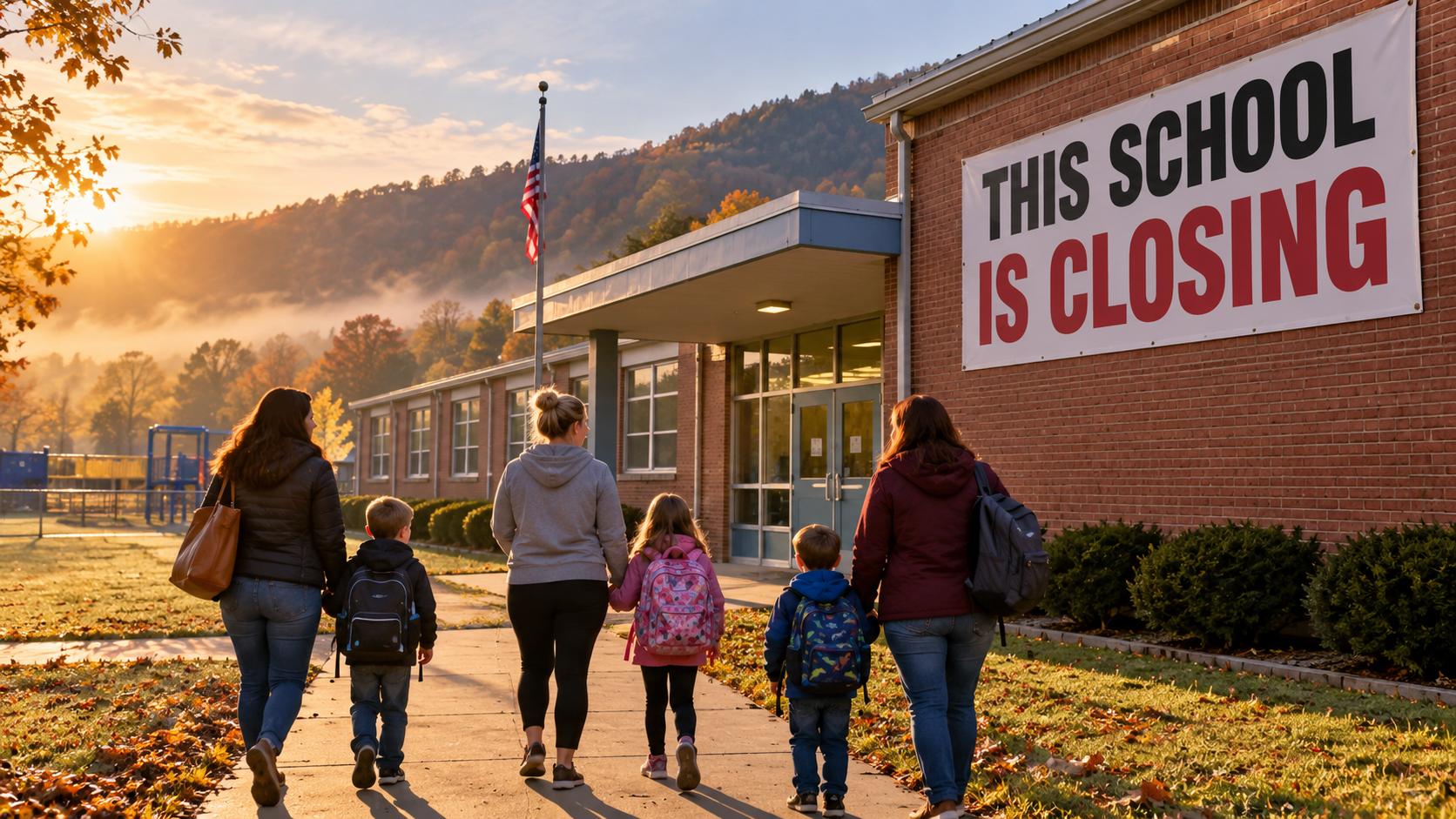
The West Virginia Constitution contains an educational mandate of only sixteen words:
“The Legislature shall provide, by general law, for a thorough and efficient system of free schools.”
Those words—thorough and efficient—belong together in Article XII, Section 1. West Virginia Constitution
But they do not necessarily point in the same direction.
The most thorough education imaginable might be a highly qualified teacher assigned to one child, teaching that child one-on-one in the child's own home. Every lesson could be tailored to that student's strengths, weaknesses, interests and pace.
It would also be extraordinarily expensive.
At the opposite extreme, perhaps the most efficient education imaginable would be to give every child a laptop, Starlink connection and personalized online curriculum and let technology deliver instruction at a fraction of the current cost of maintaining thousands of classrooms.
It might be inexpensive. But who watches a six-year-old while both parents work? Who teaches the child how to cooperate with others? Who notices that he is struggling emotionally? Who provides sports, music, friendships and community?
Neither extreme is likely to be the answer.
And that may be precisely why the Constitution contains both words.
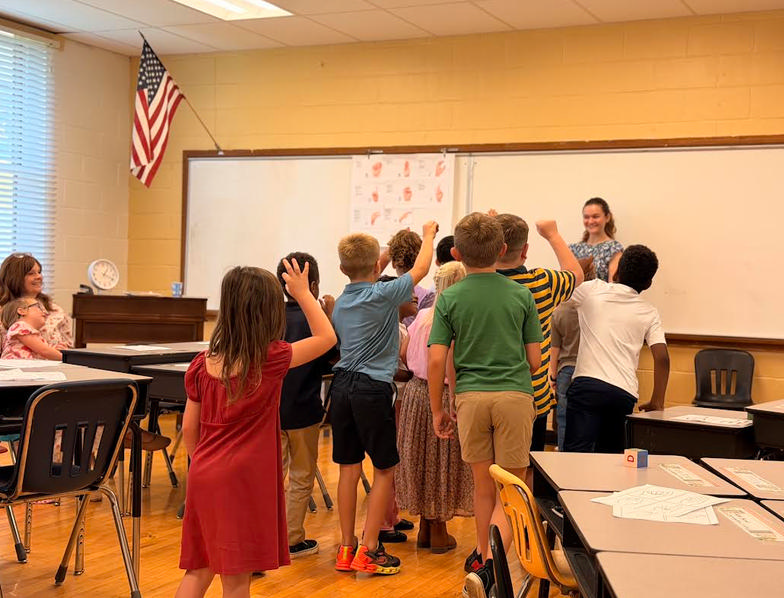
The Harman school closure puts the question in front of us again
The newly filed Harman School lawsuit provides an almost perfect example.
The Harman school was a small rural K-12 school in Randolph County. Its enrollment declined from 170 students in 2018-19 to 105 in 2024-25. The county's own closure documents projected further declines. The building also presented substantial costs: Randolph County estimated approximately $3.8 million would be required to bring Harman up to code.
Randolph County closed Harman at the end of the 2025-26 school year. The lawsuit filed September 17th by Hometown Hope asks a circuit judge to reopen it.
The complaint raises legitimate questions that deserve answers. It alleges that elementary students now must reach a centralized bus stop by 5:57 a.m. and then endure a one-way bus ride of approximately one hour and 23 minutes in good weather. It argues that this exceeds West Virginia's statutory limitations for new elementary bus routes resulting from school consolidation.
It also challenges Randolph County's decision to convey the Harman property through a private $10 transaction, arguing that West Virginia law required a public auction. Those are concrete legal questions for a court to decide.
But then the complaint goes much further.
It attempts to connect Harman's closing to the statewide Hope Scholarship program. The complaint says the circumstances anticipated by the Supreme Court in State v. Beaver have now occurred: public-school enrollment has declined, Hope has expanded, county systems face fiscal stress and Randolph County has closed schools.
That argument misses a much larger question.
What are we actually trying to prioritize — the educational system we inherited, or the education of the child?
Dingess asks the same question
Two weeks ago, in discussing the possible closing of Dingess Elementary in Mingo County, Senator Rollan Roberts stated that West Virginia needs to “major on the major problems and stop majoring on the minor topic of school choice.”
Dingess has a real problem. So does Harman.
The answer cannot simply be that every existing public-school building must remain open regardless of enrollment or cost. Neither should the answer be that rural children must spend hours every day on buses because consolidation produces a better number on a spreadsheet.
Our earlier Dingess article found considerable common ground among people on different sides of the controversy: rural communities have legitimate educational problems, the school funding system needs attention, and children should not become collateral damage in a fight over Hope. His Good News
Harman now gives West Virginia another opportunity to ask the more fundamental question.
What does “thorough and efficient” mean in 2026?
Is the mistake in assuming there must be one answer for every child?
Choice reconciles two competing ideas
For most of the last century, the government tried to balance thoroughness and efficiency for parents.
Today, parents have far more ability to make that calculation themselves.
A West Virginia parent can choose among:
- a traditional public school;
- homeschooling without Hope Scholarship;
- homeschooling using the Hope Scholarship;
- a traditional Christian school;
- A non-Christian private school in or out of state;
- a small church-based school or microschool;
- or a public charter school.
Each model represents a different balance between thoroughness, efficiency, family responsibility, specialization and community.
One family may believe a conventional public school provides exactly the combination its child needs.
Another may have a child with dyslexia who benefits enormously from individualized instruction.
A third may place a high value on Christian education.
Another may homeschool because one parent is home and capable of doing it.
Another may oppose taking government money because that may lead to overbearing government regulations.
For a single parent working full time, homeschooling may be practically impossible regardless of how inexpensive an online curriculum becomes.
The right answer can be different because the children and families are different.
School choice therefore does something the government cannot easily do from Charleston: it allows thousands of parents to make individual decisions, in the best interest of each child, about the proper balance between thorough and efficient.
Competition changes the question
State Treasurer Larry Pack made another point quoted in our Dingess article that becomes even more important in Harman.
His position is essentially that when different forms of educational delivery are required to compete, they must respond to families or eventually cease to be viable. In his public response to the earlier Hope litigation, Pack argued that strengthening public education and preserving educational choice are not mutually exclusive goals. His Good News
That changes the discussion.
A public school should not survive merely because it is a public school.
A Christian school should not survive merely because it is Christian.
A charter school should not survive because it is new.
A microschool should not survive because it is inexpensive.
Each should survive because parents believe it is doing the best job of educating their children with the resources available.
That is competition; each “school” must compete to convince the parents that they provide the best education for their children. No one “school” is the “correct” answer for every child.
Competition does not have to destroy public education. It can force every educational provider—including public schools—to ask questions monopolies rarely have to ask:
What is the goal of education?
What do parents want?
What does this child need?
What are we doing well?
What are we doing poorly?
Could we provide this education differently?
Could we provide it better?
Could we provide it for less?
Fifty years ago, At&T was the monopoly for virtually all long distance calls and the price of a 10 minute call between Charleston and Houston was $4.28; today “long distance calls” are part of the package for most cell phones and normally that “call” includes video calling which was a value enhancement not envisioned 50 years ago. Could we both reduce the cost and enhance the value of education delivery by focusing on these 8 questions rather than focusing on “how we have always done it”?
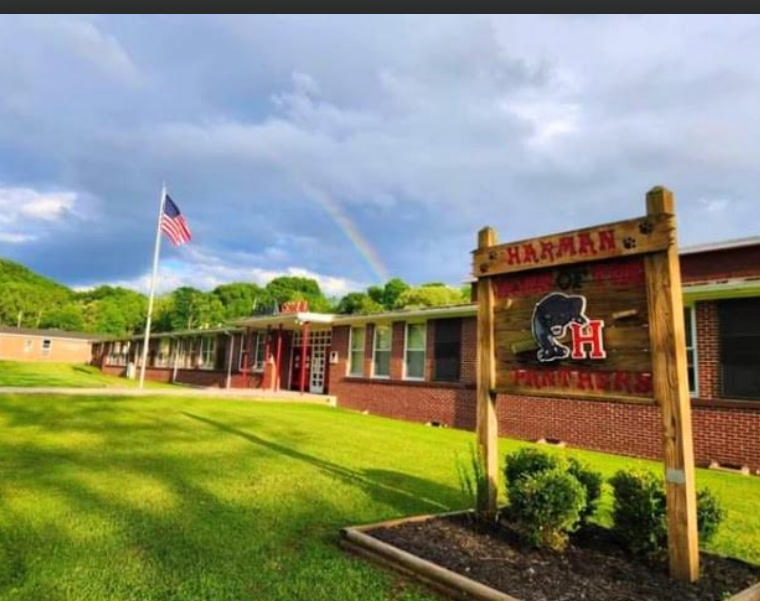
The New Harman school may demonstrate the opportunity better than the lawsuit does.
There is an irony in the Harman complaint.
The plaintiffs argue that closing Harman demonstrates a failure of West Virginia's constitutional obligation to provide a thorough and efficient education. The complaint repeatedly asks the court to reopen the school, restore its equipment and reinstate its staff.
But the Harman community itself presents another possibility.
The question does not necessarily have to be:
Public school or no school?
It can be:
What kind of school can this community sustain and what can the parents do to create it? Could a public school in a smaller community have different regulatory burdens than a large city school? Some people choose to hire lawyers and some choose to create a school of their own.
Last week, we learned a great deal about how faith, patience and action work together from a man who just helped start a Christian school in Harman. The Randolph County Board of Education approved the closure of Harman School in October 2025. The state Board of Education affirmed the County’s decision to close Harman on December 10 of 2025. God created an opportunity that most everyone else saw as a road block or dead end, but several Harman parents took the first step that God provided and then patiently waited for God to provide the next step. He called it “the million miracles to create a Christian school in 5 months.”
In the impact statement, the Board of Education stated the transportation times did not exceed 57 minutes. Obviously that was to keep it below the 60 minute threshold but that statement is not safely possible in a car on those roads in good weather much less in a school bus during the winter. As of the date of this article, only 19 parents had selected that “bus option”.
Many Harman parents started working together and convinced the school board to sell the building to a new school they planned to create and then took many successive steps to create a new Christian school in the old public school building. Three weeks ago 28 kids started school there: 20 full time students but two of those in preschool so they do not get the Hope scholarship; 18 use the Hope scholarship. Seven more students are homeschooled and spend part of the week at the Harman School. “There are several other parents who homeschool and have inquired about their children attending certain days or certain classes at Harman School. One of the parents is also a teacher and former principal. So not only do her children attend some classes at Harman School, the parent also teaches a class on the days her children attend”. The Harman schedule attracts dual enrollment or “part time homeschool students". Mornings tend to be the core courses such as math, English, literature, science, etc. The afternoons are electives like Spanish, wood working, sign language, music, and art.
How do you go from roadblock to a new school in only a few months? Their answer was: “God, show us the next step and we did it; then He showed us the next step; it was like millions of small miracles.”
Many humans look at obstacles as road blocks but many times God allows those obstacles to show us a better direction; they are only detours that God provides.
Sometimes God explains the detour in advance.
“The LORD your God will drive those nations out ahead of you little by little. You will not clear them away all at once, otherwise the wild animals would multiply too quickly for you.”
That is exactly the opportunity we wrote about in Dingess.
A community might conclude that the existing public school is its best answer. Another might create a microschool. A church might open classrooms during the week. Parents might combine classroom instruction with homeschooling. Technology might permit several grade levels to share specialized teachers who could never economically be placed full-time in every small rural building.
The possibilities between a one-child/one-teacher school and a laptop sitting alone on a kitchen table are enormous.
And that is where the two words in our Constitution meet.
Thorough and efficient
West Virginia's educational debate has falsely been framed as public schools versus school choice.
That is the wrong argument.
The real challenge is how to provide every West Virginia child with the best education we can reasonably afford.
The Constitution does not command merely a thorough system.
It does not command merely an efficient system.
It commands both.
Those goals will sometimes compete.
School choice gives parents the power to decide where that balance should fall for their own children. Public schools, Christian schools, charter schools, microschools and homeschooling then have to demonstrate that they can provide something families value.
Are Harman or Dingess anomalies; are there other small communities where parents felt a need to choose a different path than public schools? Five years ago, parents from Faith Baptist Church in Spencer, a small community of just over 2,000 people started a Christian school with about 35 students. Today Faith Christian Academy has 114 students and two campuses.
And Treasurer Pack's principle applies to all of them:
When different methods of delivering education are forced to compete, they will either rise to the occasion—or cease to be viable options.
Harman and Dingess should not merely become the latest battlegrounds in West Virginia's school-choice litigation.
They should become laboratories for answering the much more important question our Constitution placed before us generations ago:
How do we give every child an education that is both thorough and efficient; what do we do that is best for our children?
Now it is time for our Governor, Legislature and Supreme Court to act.
We were in the room many years ago when then Attorney General and now Governor Morrisey made the statement “If you will let me write the Hope Law, I will make it defensible.” The West Virginia Supreme Court validated his statement. Is it now time for Governor Morrisey to ask the West Virginia Supreme Court to settle this matter not only so that parents, schools, children and teachers know how to prioritize and plan rather than be in limbo about the future, but also so that parents who face public school closings in other small West Virginia communities know their options?
Is it now time for the Legislature to create a public school funding formula that compromises the two words the authors of the constitution envisioned- both thorough and efficient?
Is it now time for the Department of Education to become transparent about their plan to make the school system more efficient while not compromising its thoroughness? It's not “can it do both” but “how can it do both?”
Parents have made their choice known by selecting the Governor, the Treasurer, the Judges and the Legislators who support a parent’s right to choose how and where their children are educated.
During this year’s Primary Elections, parents expressed their strong endorsement of their right to choose the right education path for their children and parents will continue to have that privilege every time that we vote.
Sources
- West Virginia Constitution, Article XII, Section 1 — “Thorough and Efficient System of Free Schools”
West Virginia Legislature — Constitution - Hometown Hope v. Randolph County Board of Education and Derek Lambert — Petition for Injunctive Relief and Complaint for Declaratory Judgment, Randolph County Circuit Court, Case No. CC-42-2026-C-122, filed September 17, 2026.
- State v. Beaver, 248 W.Va. 177, 887 S.E.2d 610 (2022) — West Virginia Supreme Court of Appeals decision concerning the Hope Scholarship Act.
West Virginia Judiciary — State v. Beaver opinion - West Virginia Code §18-2E-5d — School bus transportation time requirements
West Virginia Legislature — §18-2E-5d - West Virginia Code §18-5-7 — Disposition of school property
West Virginia Legislature — §18-5-7 - “West Virginia Needs to Major on the Major Problems” — HisGoodNews.tv
HisGoodNews article - RAND — West Virginia Public School Funding Formula Study
Referenced and quoted in the Hometown Hope complaint, including RAND's analysis of declining enrollment, higher-cost students and the Hope Scholarship expansion.

HGN Staff
His Good News magazine seeks to unite and empower parents, educators, legislators, and voters in West Virginia to support and advance Christian education, religious freedom, and conservative values. By fostering a strong Jesus-based foundation within our communities, we can influence legislation, protect religious freedoms, and ensure that our children receive a quality Christian education.