A Scent of Water
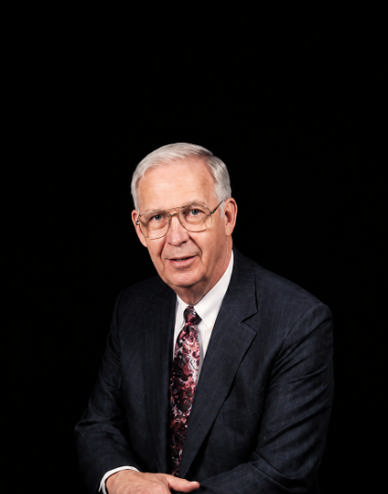
The Life and Work of Dr. Phil Suiter
For there is hope of a tree, if it be cut down, that it will sprout again, and that the tender branch thereof will not cease.
Though the root thereof wax old in the earth, and the stock thereof die in the ground;
Yet through the scent of water it will bud, and bring forth boughs like a plant.
Job 14:7–9
The Image
In 2012, at the age of seventy-nine, Phil Suiter co-authored a book about Christian schooling under a title drawn from the Book of Job. A Scent of Water: Bringing Life Back to the Christian School Movement. The phrase belongs to a passage about a tree that has been cut down, its roots gone old in the earth, its stump dead in the soil, and which nevertheless buds again at the mere smell of water nearby.
It was an unusual choice for a book about school administration. It was an exact choice for the work of his life.
Suiter spent more than fifty years bringing water to institutions that looked finished. Small Christian schools with thin budgets and thinner infrastructure. A movement he believed had lost its way. A legal position so precarious that the schools relying on it did not always understand how exposed they were. He did not often plant new trees. He revived cut ones, and he did it by supplying two things: a clear account of what a healthy school actually is, and a legal ground in which one could grow at all.
He passed away late on the night of August 25, 2026, at the age of ninety-three.
Preparation
Phil Suiter was born on October 6, 1932, and grew up near Chesapeake, Ohio. During the Korean War he served in the United States Army at Aberdeen Proving Ground in Maryland, and it was there, not in any school, that he first taught. His assignment was to instruct the men of his company in the weaponry they would carry into deployment. Whether they understood him would matter to them later, in places he would not be.
He spent the following sixty years teaching people whose work mattered.
Suiter earned degrees from Marshall University, Miami University, and The Ohio State University, completing his doctorate in 1969. His career began in 1957 as a teacher at Chesapeake High School, where he later became principal. From there he joined the faculty of Marshall University, and in 1972 he entered state government, serving the West Virginia Department of Education first as Director of Professional Development, working with the state’s four-year colleges on the preparation of its teachers. He rose to Assistant State Superintendent of Schools and led the Bureau of Learning Systems.
That last office deserves attention, because much of what follows depends on it. Assistant State Superintendent is not a ceremonial title. It is a seat near the top of the machinery that governs the education of every child in a state: certification, teacher preparation, accreditation, and the standards by which a school is judged adequate or found wanting. Suiter did not learn how that machinery worked by reading about it. He helped operate it. He knew which requirements protected children and which chiefly protected the offices that issued them.
The Turn
In 1980 he resigned.
By the arithmetic of career advancement the decision was indefensible. He left the upper reaches of a state agency for a movement that then consisted largely of young schools founded during the Christian school surge of the previous decade, most of them operating out of church educational wings on conviction and very little else. They had zeal in abundance. What they lacked was the technical competence to endure and any legal footing firmer than the forbearance of officials who might one day decide to regulate them.
He had spent eight years inside those offices. He knew what was coming.
The First Pillar: What Makes a School Live
Suiter’s central conviction, held for four decades and finally written down, was that the health of a school is not a mystery. It can be described. It can be measured. It can be repaired.
Marks of a Healthy Christian School, published in 2015, drew on more than fifty years of practice to identify and define nine marks of institutional health. Its opening premise carries the weight of his entire working life: that the marks of a quality school “can be identified, thoroughly defined, and developed if improvement is needed.”
Read closely, that sentence is a refusal. Suiter would not accept the bargain that quietly hollows out a great deal of Christian schooling, in which faithfulness is offered as an excuse for mediocrity and academic rigor is treated as a concession to the world. He had spent years inside the state’s own system of standards, and he carried its discipline into Christian schools without importing its philosophy. Biblical truth first, then sound practice, then measurable standards. He held that a school could be spiritually vibrant and academically excellent, and that anyone who set the two against each other had misunderstood both.
A Scent of Water, written with Edward Earwood, had made the same argument three years earlier, and made it structurally rather than inspirationally. A school must be understood as a whole system, not as a ministry with classrooms attached. A principal should build capacity in teachers rather than merely supervise them. Teachers should hold an active and collaborative role. And the entire enterprise should orient itself around student learning and a clear account of what students are meant to become.
He did not leave those ideas on the page. He was the founding Executive Director of the West Virginia Christian Education Association, and the association operating today still rests on the foundation he laid. He served on the Board of the American Association of Christian Schools and worked with Dr. Charles Walker and others to develop the AACS Accreditation Manual, a document that shaped how Christian schools across the country came to evaluate themselves. He chaired accreditation teams nationally, which meant weeks of his life spent in unfamiliar buildings reading other people’s paperwork and telling administrators things they did not always wish to hear.
He also ran a school. Suiter served as an administrator at Cross Lanes Christian School, a ministry of Cross Lanes Bible Church, during the 1990s, and when the church later found itself without a pastor he filled the pulpit as interim from June 2002 until June 2003. His article for His Good News, “Essential Elements of a Biblical Worldview,” stated the conviction beneath all of it: that Christian education exists to help children form beliefs about God, humanity, truth, and eternity that are grounded in Scripture.
The range is the point. The same man shaped a national accreditation standard, kept a school running, and preached on Sunday to a congregation that needed someone. He appears never to have regarded any of these as beneath the others.
The Second Pillar: The Ground Itself
All of that was water. But water is no use to a tree whose ground has been taken.
In the early 1980s Christian and other nonpublic schools in West Virginia faced the genuine prospect of extensive control by state and county education authorities. The case for such control was not unreasonable on its face. Children were being educated outside the state system, and the state had an interest in knowing they were being educated at all.
The difficulty was that oversight of educational adequacy shades easily into oversight of educational philosophy, and a Christian school cannot submit its philosophy to a licensing authority and remain one. Suiter had watched the apparatus work from the inside. He knew how far a regulation reaches once it exists.
He did not merely identify the problem. He helped write the answer.
During the 1983 regular session of the West Virginia Legislature, Senators Davis, Holliday, and Heck sponsored Senate Bill 184, which emerged from committee as the Committee Substitute for Senate Bill 184. The surviving enrolled bill records its passage on March 5, 1983. It reached Governor Jay Rockefeller’s office on March 11, was signed on March 26, and took effect on June 3, ninety days after passage.
The bill did two things. It created Exemption K in West Virginia Code §18-8-1, establishing an alternative under the compulsory-attendance law for children attending private, parochial, church, religious, or other nonpublic schools. And it created an entirely new Article 28 of Chapter 18, supplying the framework under which those schools would operate.
Article 28 declared it the public policy of West Virginia that “no human authority shall, in any case whatever, control or interfere with the rights of conscience or with religious liberty.”
The framework asked real things of participating schools: attendance records, a defined instructional term, standardized testing, compliance with health and safety law. It did not place them under the general control of the State Board of Education. And §18-28-6 closed the door behind them, declaring the requirements of Article 28 exclusive. A school complying with Article 28 would not be reached by other provisions of education law, save those governing fire, safety, sanitation, and immunization.
This is a difficult line to draw. Too loose, and the state has no assurance children are learning. Too tight, and the school is administered from Charleston. The line in Article 28 was drawn by a man who had spent eight years learning exactly where it lay, and who then spent his standing and his relationships persuading legislators to put it there.
Of everything Suiter accomplished, this was the summit, and for a reason worth stating plainly. His books can be disagreed with. His accreditation standards can be revised. His association will be led by other people. But Exemption K is the precondition of all of it. A healthy school is only possible where a school is free, and after June 3, 1983, every Christian school in West Virginia was free by statute rather than by permission.
More than forty-three years later, that law stands.
Dr. Suiter was the Father of School of Choice. He knew the Battle was not just for Christian schools but also for the rights of the parents who chose to educate their children at home
The same instinct extended to families teaching at home. When homeschooling parents began relying on the phrase “other nonpublic school” as their legal avenue, and state authorities later contested the practice, Suiter helped bring those families together and worked with Don Fox and others to secure clearer statutory protection for home education.
In the 1980’s, a handful of families waged a long and personally costly campaign to win the right to homeschool in West Virginia. One of them, the Gene Board family, writes, "Dr. Suiter's leadership and guidance formed the bedrock of our journey." He met with the lobbying families often and was instrumental in helping them be informed, consistent, and concise. His quiet guidance, confidence, and faith served as an anchor for the parents who found themselves lobbying legislators to win the right to direct their children's education.
Mike Hutchison, former president of Christian Home Educators of West Virginia remembers Dr. Suiter as a great personal friend and advocate for parental rights in the education of children. "He was very influential in all sectors of education in West Virginia...but made a tremendous impact on non-public education." Certainly CHEWV is greatly indebted to Dr. Suiter and he will be greatly missed.
Still Walking the Halls
A man who has written a law into the code might reasonably consider his account settled.
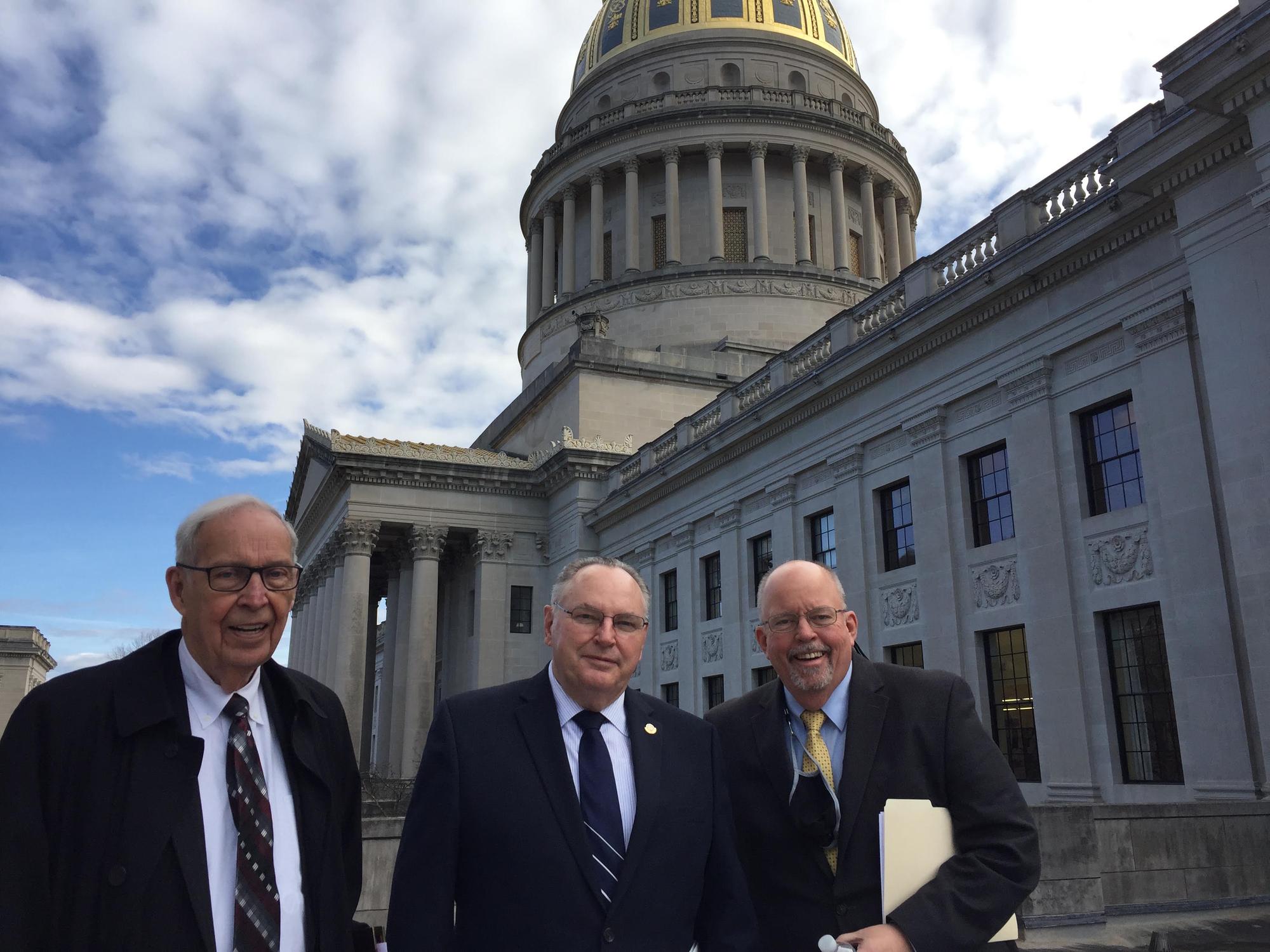
During the 2021 legislative session, in the middle of the COVID-19 pandemic, Suiter went to the West Virginia Capitol with State Senator Rollan Roberts and WVCEA Executive Director Dan Brokke to build support for the Hope Scholarship. He was eighty-eight years old. He walked the building, up and down and all over it, introducing himself to anyone who would listen and making the case for Christian education.
Neither his age, nor the size of the Capitol, nor a pandemic appears to have entered his calculations. There were still children who needed advocates, parents who needed choices, and schools that needed a voice in the room. Thirty-eight years after Exemption K, the cause was still worth walking for.
The Cornfield by the Creek
None of the foregoing explains the man, and Suiter would have said so first.
On November 11, 1946, during a week of revival services, a fourteen-year-old boy was born again in a cornfield along the banks of Indian Guyan Creek. Everything documented above proceeds from that afternoon beside running water. He became an avid reader and a lifelong student of Scripture, and he remained to the end of his life deeply concerned that other people understand what the new birth actually means.
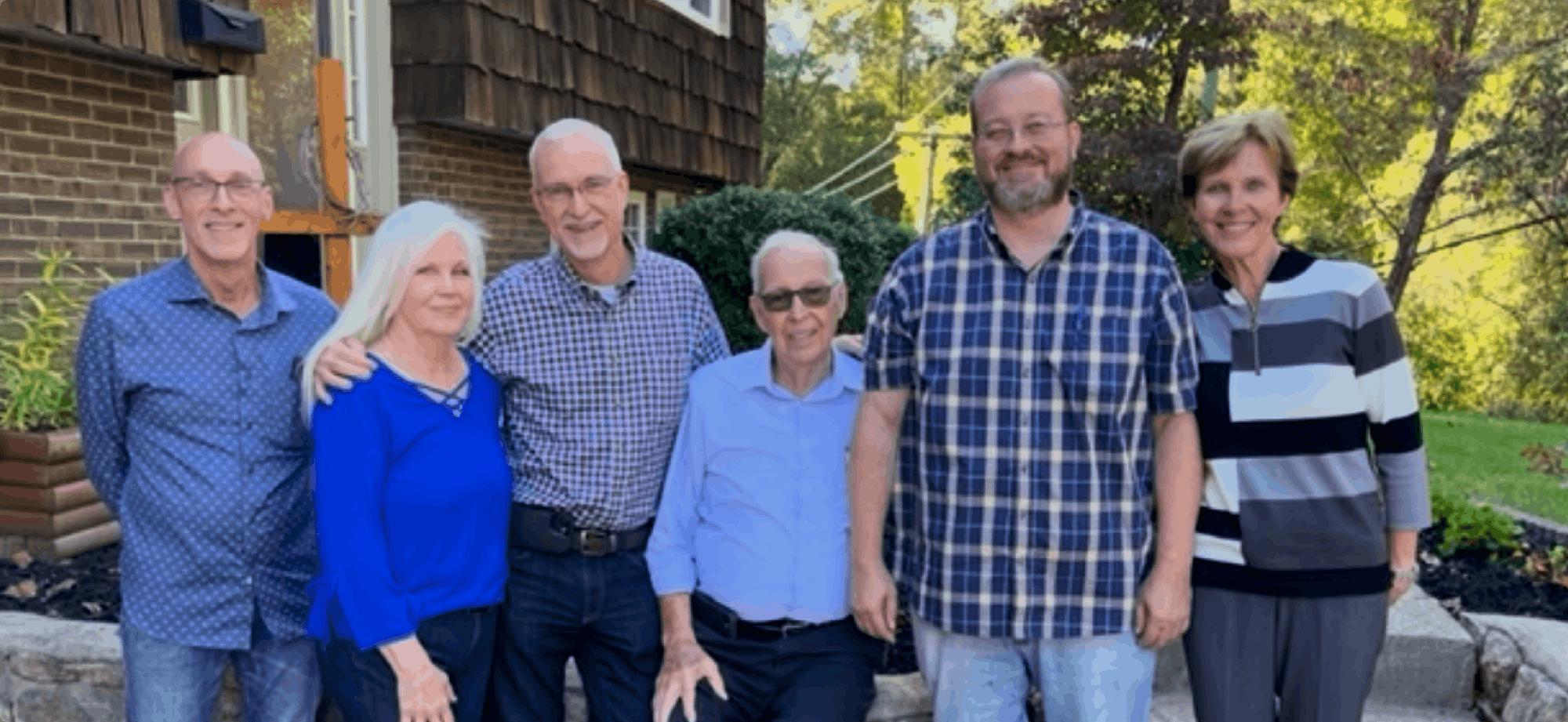
He was devoted to his family with the same steadiness he brought to everything else, taking a personal interest in his children, grandchildren, and great-grandchildren, and praying for them daily by name. He loved family gatherings, passed along his love of music, and spoke often of his gratitude for the Christian home he was raised in.
He understood that Christian education is finally about none of the things he became known for. Not legislation, not accreditation, not testing, not academic achievement. It is about teaching truth, reaching hearts, and preparing young people to live for Christ. The law and the standards were scaffolding, built to protect the work that mattered.
What Remains
Very few people have their names attached to a statute, a national accreditation manual, a statewide association, and a shelf of books used to train educators. Suiter’s work touched all four.
None of them is the legacy. The legacy is a Christian school in West Virginia opening on a Tuesday morning, free to teach what it believes, its administrator working from standards Suiter helped write, its teachers understanding their calling as a calling, its parents having had a genuine choice, and its students learning to read the world through Scripture.
Most of the families who benefit from his work each school day never heard his name, and never will. He would have considered that an entirely acceptable arrangement.
The passage he borrowed his title from does not stop at the tree. A few verses on, Job asks the question every mourner asks: if a man die, shall he live again? Phil Suiter answered that question with his life for nearly eighty years, and on the night of August 25 he received the answer directly.
He took the education, the opportunities, and the influence God gave him and spent all of it on other people. It is still being spent. The schools he protected will outlast everyone now living who remembers why they are free, and the boughs are still coming up.
The WVCEA family gives thanks to God for Dr. Phil Suiter — a faithful servant, a courageous advocate, and a dear friend. We ask Christian school leaders, educators, families, and friends across West Virginia and beyond to hold his family in prayer in the days ahead.

Dan Brokke
Dr. Dan Brokke serves as the Executive Director of West Virginia Christian Education Association and brings over 40 years of Christian education experience to the position. He has an Ed.D. in Educational Administration and has taught on the elementary, secondary and college levels, and has administrated Christian schools for over 30 years.