Faith in the Age of Machines
A Survey of Christian Perspectives on AI, Robots, Family, and Faith
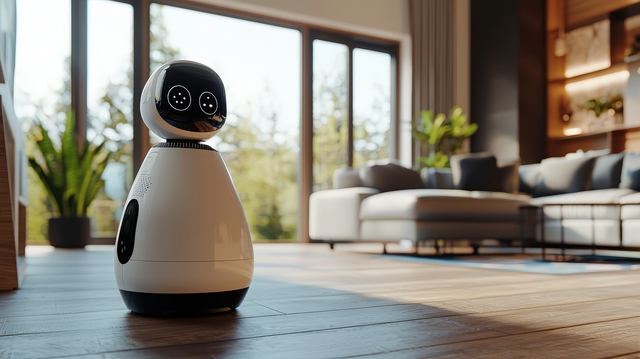
Humanoid robots are not a distant concept. They are part of the near future already taking shape. And just as we saw with the Internet, social media, and artificial intelligence, society often reacts only after a technology has already reshaped daily life. Legislation, ethical standards, and public understanding tend to lag far behind.
With this technology, that cannot be the case.
Christians must think ahead. We must understand what is coming, and we must ensure that our values, human dignity, discipleship, and the protection of the vulnerable, are not an afterthought. That’s why we asked these questions, and why your voice matters.
And while these results reflect the views of My Faith Votes supporters and not all Christians nationwide, more than 1,200 responses provide a strong and statistically meaningful picture of how engaged believers are processing this moment.
Survey Analysis- What We Heard From Our Audience
1. Humanoid Robots in the Home
More than 80% of respondents said they would not feel comfortable having a humanoid robot in their home for tasks like caregiving, companionship, or cleaning. And nearly 70% believe such robots would weaken a family’s spiritual life.
The message is unmistakable: Believers see the home as a sacred space and not a testing ground for human-like machines.
2. Human Connection and God-Designed Relationships
An overwhelming 95% expressed concern, most of them very concerned, that robots could replace human connection in areas God designed for human relationships.
This is not fear of technology. This is a defense of biblical anthropology.
3. Spiritual Boundaries
Three-quarters of respondents said they would not trust a robot to assist with spiritual routines such as reading Scripture aloud or offering devotional prompts.
Christians draw a clear line: Technology may assist life, but it must never mediate spiritual formation.
4. Ethical Guardrails and Public Policy
More than 95% believe Christians should set ethical boundaries for how robots and AI are used in the home. And 96% believe society must have guidelines to protect children, the elderly, and vulnerable individuals.
This is one of the strongest consensus points we have ever seen in a survey.
Christians are not passive. They want guardrails and they want them before this technology becomes widespread.
5. What Concerns Christians Most About Humanoid Robots
When asked which concern mattered most, respondents were nearly split between loss of human connection (35.7%) and privacy/surveillance (34.3%), with spiritual influence on children and families (18.3%) close behind. Very few selected job displacement or “no major concerns.”
But the write-in responses reveal something even more important: Many Christians do not see these concerns as separate at all. They see them as interconnected and compounding.
A large number of respondents didn’t choose one option; they insisted on “all of the above,” often with strong or urgent language. Their comments revealed several deeper themes:
- A holistic sense of threat — not one issue, but a convergence of relational, spiritual, ethical, and privacy dangers.
- Spiritual deception and doctrinal corruption.
- End-times and prophetic concerns.
- Surveillance and social control.
- Fear of physical harm or malfunction.
- Erosion of family, work ethic, and discipleship.
- Distrust of the people behind the technology.
Taken together, these write-ins show that Christians are not merely uneasy, they are deeply alert to the spiritual, relational, and societal implications of humanoid robots in the home.
This is not a narrow concern. It is a comprehensive worldview concern.
6. Biblical Principles for the Future
When asked which biblical principle matters most as technology becomes more human-like, the top answer, by a wide margin, was discernment and wisdom.
Write-in responses added depth:
- Humans are made in God’s image; robots are not.
- We must guard against idolatry and misplaced trust.
- We must protect children from unbiblical influence.
- We must remain rooted in Scripture, not in the promises of technology.
- We must not allow machines to replace God-designed community.
This is a call to spiritual vigilance.
7. Autonomous Vehicles
The same pattern of caution appeared in the autonomous-car questions:
• 80% would not feel comfortable riding in a fully autonomous car with no steering wheel.
• 82% would not consider owning one.
• A majority believe insurance rates would increase, not decrease.
Christians do not trust technologies that remove human agency, especially when safety and accountability are at stake.
Please click here for full survey results.
What This Means for Us
This survey reveals something important: Christians are not anti-technology. They are pro-wisdom.
They want innovation that honors human dignity. They want tools that support families, not replace them. They want guardrails that protect the vulnerable. And they want leaders who will speak up before the technology is already in their homes.
This is why My Faith Votes is paying attention now — not later.
We cannot afford another era where technology reshapes society faster than ethics, law, or faith can respond. The Church must be proactive, not reactive. And your voice helps shape that response.
My Faith Votes Team
My Faith Votes, a ministry of Million Voices, is a national nonpartisan movement that empowers Christians to pray, think, and vote with a strong biblical worldview. We exist to motivate and equip believers to bring the influence of their faith into the public square by providing clear election information, practical voting tools, and resources that cut through confusion and apathy. Our mission is simple and urgent: to activate Christians to participate in every election, local and national.