Spring Has Sprung, the Sun Is Riz— I Wonder Where the Flowers Is?
Most things in our lives are shaped by perspective. Perspective is reality—where you stand determines what you see.
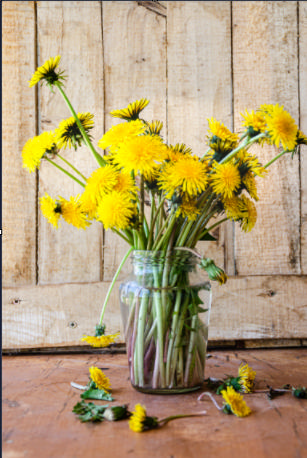
I remember years ago, around this time of year, my daughter picked “flowers” from the yard and brought them to me. Now, I must qualify what flowers are to a little girl. She brought me a handful of dandelions and blossoming weeds. Of course, I would be mowing those “flowers” down in a few short days. But in her eyes, she saw beauty in things that would eventually be considered weeds.
Most things in our lives are shaped by perspective.
Perspective is reality—where you stand determines what you see. We all have things we like and admire that others may detest or avoid. These are called preferences.
For example, I am not a fan of seafood—I don’t like the way it looks, smells, or feels. Others, however, love fish, shrimp, and crab legs. Our differences help define us and make life interesting. It is often true, especially in marriage, that opposites attract. Embracing these differences can lead to greater understanding and a more open-minded outlook.
1 Corinthians 4:7 says, “For who maketh thee to differ from another? And what hast thou that thou didst not receive? Now if thou didst receive it, why dost thou glory, as if thou hadst not received it?”
We have nothing that we did not receive from God. Our abilities, talents, possessions—even our very existence—are gifts from Him. If everything we have is a gift, then we have no reason to boast. Instead, we should be grateful and humble. Boasting about what God has given us is, in essence, a subtle form of ingratitude.

Diversity is what makes organizations successful.
We see a variety of talents and abilities in every group of people. In practical terms, this diversity is what makes organizations successful. In our school, for instance, we have many teachers—but not all possess the same skills, training, or gifts. Some are especially effective with young children, while others excel at teaching subjects like calculus or chemistry. It takes many individuals to make a whole.
In 1 Corinthians 12:17, Paul gives a humorous illustration: if the whole body were an eye, where would hearing be? If the whole body were an ear, where would the sense of smell be? Aren’t you glad we are not all just walking ears or giant eyeballs? The Kingdom of God, like the human body, is made up of many parts, each with its own purpose.
Even Aesop illustrated this truth in his fable “The Belly and the Members.” In the story, the different parts of the body—such as the hands, feet, and mouth—become frustrated because they feel like they do all the work while the belly simply takes in food and does nothing. In protest, they stop working.
Before long, the entire body grows weak and begins to fail. The members realize that the belly was not lazy after all—it was essential, providing nourishment that kept every part functioning.
The Moral of the story: Every part of a group has an important role. Even those whose work is less visible are vital to the success and well-being of the whole. That's perspective.
If you don’t think you have blind spots—that’s your blind spot.
Sometimes our perspective becomes distorted by preferences, lack of knowledge, misunderstandings, or pride. We call this having a “blind spot.” A blind spot may refer to a physical limitation in vision, an unseen area around a vehicle, or a personal bias we are unaware of. As someone humorously said, “If you don’t think you have blind spots—that’s your blind spot.” That's perspective.
It is easy to make judgments based on limited or biased perspectives. Ask any married couple, and they will tell you that many disagreements stem from personal preferences or misunderstandings. Good advice is to step back from the situation. Sometimes we can’t see the forest for the trees. Try to see things from another person’s point of view. Walk in their shoes for a while to better understand. Sleep on it and see if you feel the same in the morning. Let time pass before reacting. Overreacting without adjusting our perspective often leads to regret. Taking time to reflect is essential for growth and understanding. That's perspective.
While at a garage sale recently, someone said, "One man's junk is another man's treasure." I left with a box of "treasures." That's perspective.
"In the multitude of counselors there is safety" (Prov. 11:14).
I used to question what the wisdom from many others keeps me safe from? Years ago, the school board at a school in NJ was about to embark on a quarter-million-dollar capital campaign to improve the campus. When the project was brought before the deacon and trustee board for final approval, one gentleman pulled the plug on the entire project. He saw several potential legal violations of township ordinances that would eventually cost the school thousands of dollars in fines, fees, and permits. Though it was disappointing not to be able to move forward with the project, his foresight was essential for the safety of the investment and capital venture. That's perspective.
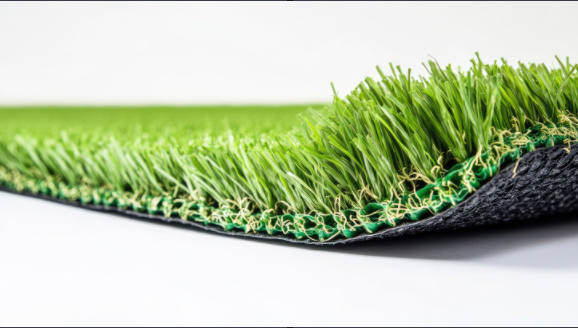
Living with a “grass is always greener” mindset reflects both perspective and discontentment. Erma Bombeck wrote a book titled The Grass Is Always Greener Over the Septic Tank, humorously reminding us that what appears better on the other side may not be what it seems. Sometimes what looks greener is simply artificial turf—an illusion that ultimately disappoints. That's perspective.
Final Thoughts:
What my daughter saw as a beautiful bouquet of flowers was affirmed by my response. I took the flowers she picked—just for me—and placed them in a vase on my desk for everyone to see. I’m sure some wondered why I had weeds displayed so prominently.
I even took one of those dandelions and pressed it into my Bible at 1 Corinthians 13, the great chapter on love (charity in the KJV)—fitting, since my daughter’s name is Charity. Recently, I came across that pressed flower again. It brought back many precious memories and a meaningful reminder, hence the inspiration for this article.
From her perspective, she wasn’t just giving me wildflowers—she was giving me a piece of her heart. That is what made the bouquet truly valuable. That lesson will forever remind me of perspective.
"Spring has sprung, the sun is riz, that, my friend, is where the flowers is!".

Eddie Riley
Eddie Riley is the ADMINISTRATOR, SENIOR BIBLE Instructor for Cross Lanes Christian School, and has served in this position since 2013. He has faithfully ministered in Christian Education for over 40 years at schools in NC, AZ, FL, VA, NJ, and WV. Eddie holds a BA in Bible from Bob Jones University, and M.Ed. from West Coast Baptist College