The Bible as Literature
Should the Bible be taught in public schools as a foundational work of history, literature, and Western civilization—or does that cross a constitutional line?
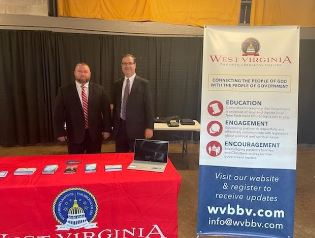
My name is Jonathan Pinson; I am a Pastor, foster parent, West Virginia Legislator and farmer. Through most of my teenage years, and for my entire adult life I have studied the Bible.The Bible is the most impactful piece of literature the world has ever known! What are the odds that something could happen six thousand years ago, be written down thirty five hundred years ago, and yet still roll off of tongues around the world in every language and dialect each and every day in the year 2026?
And yet every time a parent claims that a child is “raising Cain,” that is exactly what happens, as people give nearly mindless homage to the account of Genesis chapter four. There is no piece of literature on the planet quite like the Bible. It is far and away the most widely distributed and read book in the history of mankind-and for GOOD REASON. It is so very influential that everyone from bitter antagonists to ardent supporters quote from it time and time again, many of them not even realizing that they are doing so. People speak of the “Golden Rule”, “having peace in the storm” and food tasting like “manna from heaven”-never even realizing what they are ACTUALLY QUOTING THE BIBLE. When heavy rains set in, some weatherman somewhere is certain to call it “a flood of Biblical proportions,” a nod to the account of Noah’s world-wide flood in Genesis chapter six.
I was there, in Morgantown in 2003, when the Virginia Tech Hokies, ranked third in the nation, rolled into Morgantown, heavy favorites over our underdog Mountaineers. When the Mountaineers did the unthinkable, beating the heavily favored Hokies 28-7, so many people waxed Biblical and called it a “David versus Goliath win”. If you had a dollar for everyone who did so you could “pave main street with gold”, which, by the way, is yet another reference from the Bible.
If one could build a time machine, go back in time, and simply erase the Bible from existence, we would arrive back in our time, today, to find that the world of literature had lost most all of its most lovely works, and taken on a dull, drab shade of gray.The Bible is not just great literature, it is in many ways the mother of most all other great literature in the western world.
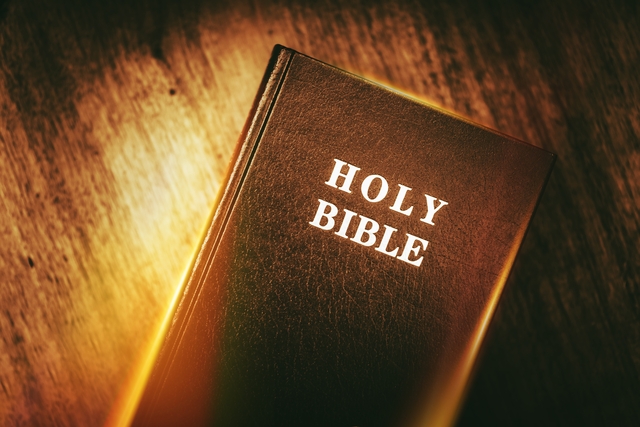
In 1436, a German goldsmith who had suffered heavy monetary losses on one project, turned his attention to something that would alter the entire world. His name was Johannes Gutenberg. His invention was the moveable type printing press. And the very first full book to roll off that press was the very book we are talking about today, the Bible. Consider the words of John 3:16 “For God so loved the world, that he gave his only begotten Son, that whosoever believeth in him should not perish, but have everlasting life.” Hot off the printing press in 1436. That’s 56 years prior to Christopher Columbus setting foot in the Americas AND 340 years prior to America declaring her independence from the British Empire.
The Bible is art, it is literature, it is living history, and EVEN absent any “theological proselytizing,” it is worthy of being taught, studied, and forever admired as the MOST towering, un-matchable work the world has ever known.

Across the country, some states are beginning to introduce the Bible into public school classes like history, civics, and English. While this trend is still developing, it could become a major shift in education policy, especially in states led by Republican lawmakers.
In Utah, a new law signed by Governor Spencer Cox allows schools to include the Bible as part of studying important historical documents starting in the 2028–29 school year. Similarly, Texas is moving forward with new social studies standards that include Biblical references and stories. Texas law also allows schools to set aside time each day for prayer or reading religious texts, if districts choose to participate.
Kentucky has taken a different approach. A recent law allows students, with parental permission, to leave school during the day for up to an hour to receive religious or moral instruction. This has opened the door for organizations like LifeWise Academy to offer Bible-based programs to public school students. A proposed follow-up bill could go even further by requiring schools to allow these programs and possibly expanding them onto school campuses.
In Tennessee, lawmakers have proposed legislation that would both create time during the school day for optional prayer or Bible reading and require schools to teach parts of the Bible. Supporters say this instruction would focus on history and literature—covering topics like the history of Israel, the life of Jesus, and the Bible’s influence on Western civilization.
Supporters of these efforts argue that the Bible is essential for understanding American history and culture. They believe students cannot fully grasp the nation’s founding principles without understanding the Biblical ideas that influenced them. For example, some lawmakers emphasize teaching the Bible as a historical and literary text—not as religious doctrine.
Currently, about 3,500 schools across 41 states already offer Bible courses as high school electives. These courses are typically framed as academic studies rather than religious instruction.
However, critics raise concerns about the separation of church and state. They argue that while it is legal to teach about religion in public schools, teaching religion itself crosses a constitutional line. The difference often comes down to how the material is presented, the age of the students, and how the curriculum is implemented.
This movement follows other recent education policies, including laws requiring the display of the Ten Commandments in schools. States like Louisiana, Texas, Arkansas, and Alabama have passed such laws, often describing the Ten Commandments as foundational to American history and culture.
Opponents of these laws have filed lawsuits, arguing they violate constitutional restrictions. Some of these cases are still working their way through the courts and will probably be decided by the U.S. Supreme Court.
We all want our children to learn history but a history class without the Bible is not real history. What is your opinion? Is the Bible a history book that should be included in every school? Email me and let me know what you think: [email protected]

Jonathan Pinson
Jonathan Pinson (Republican Party) is a member of the West Virginia House of Delegates, representing District 17. Jonathan Pinson graduated from Ravenswood High School. Pinson earned a degree from West Virginia University at Parkersburg. His career experience includes working as a police officer with the Jackson County Sheriff's Department and a pastor at Grace Baptist Church.