"West Virginia needs to major on the major problems and stop majoring on the minor topic of school choice."
Is there common ground; if so where?
A legal complaint is a peculiar kind of document. For a hundred paragraphs it narrates a grievance, patiently and in the passive voice, and only in its final pages does it name the thing it actually wants. The two lawsuits filed against the Hope Scholarship September 4 follow that form. The complaint in McCloud v. West Virginia State Treasurer, filed September 4 in Kanawha County Circuit Court under case number CC-20-2026-C-1103 and first reported by West Virginia Watch, is careful throughout. It concedes that the Supreme Court of Appeals has already upheld the program in State v. Beaver, disclaims any intention to disturb that ruling, and describes what it seeks as "narrowly drawn injunctive relief directed at the 2026-2027 universal eligibility expansion." The reader arrives at paragraph 110 expecting modesty. What the paragraph asks for is this:
¶ 110. Plaintiffs request relief narrowly tailored to two things: (a) an order enjoining further disbursement of Hope Scholarship funds to new, first-time applicants who became eligible only by operation of the 2026-2027 universal eligibility expansion, pending final resolution of this action; and (b) an order requiring Defendants to provide an accounting of Program disbursements by county and by recipient type, distinguishing public, private religious, private non-religious, and home school recipients, sufficient to permit the Court and the parties to evaluate the as-applied claims.
The Prayer for Relief then opens with three requests:
WHEREFORE, Plaintiffs respectfully request that this Court:
- Issue a temporary restraining order and, thereafter, a preliminary injunction as described in Section IX;
- Declare that the Hope Scholarship Program, as currently funded and administered, is inconsistent with Article XII, § 1 of the West Virginia Constitution as applied to its current scale and its fiscal effects on county public school systems;
- Declare the rights of the parties under Article III, § 15 of the West Virginia Constitution as applied to Program disbursements for religious educational instruction;
Strip away the qualifiers and the request is plain. Every family in West Virginia that qualified for Hope this year under universal eligibility, having never been enrolled in a public school, would have its funding frozen while the case proceeds. The State would be required to sort every recipient in the program by religion. And the court would be asked to declare that Hope, at its present size, offends the Constitution, and to say something about whether tax dollars flowing to religious schools offend it as well. The plaintiffs are right that this is not a request to abolish the program. It is a request to close the door on the newest families and to hold the rest under a cloud.
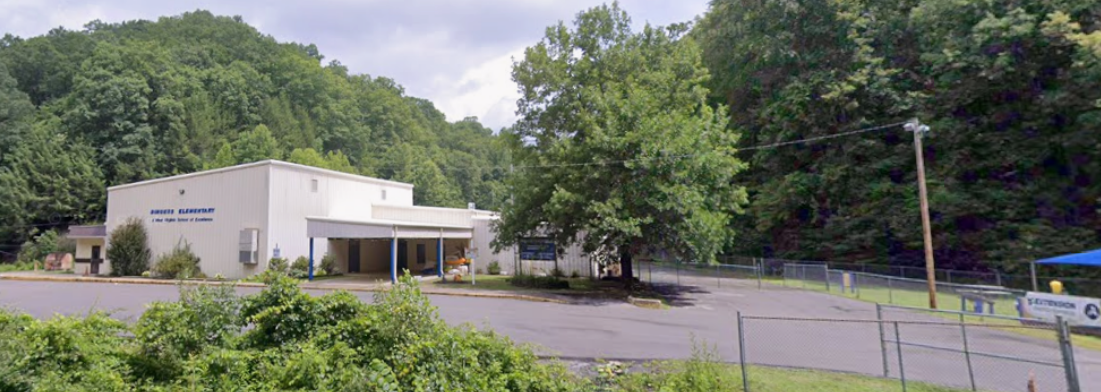
The distance between the grievance and the remedy is the whole story. The grievance is local and specific: Dingess Elementary, a small school in a county whose board has been under state control since March 2025, is likely to close, and the children who attend it face a long bus ride to somewhere else. A companion suit filed the same day against the Mingo County and state boards of education addresses that closure directly. The remedy is statewide and indiscriminate: tens of thousands of families who have never set foot in Mingo County, and who bear no responsibility for its condition, would lose an educational path they have already begun walking. Whatever one thinks of the Hope Scholarship, that mismatch should trouble anyone who believes that a remedy ought to bear some relation to the harm it claims to address.
How did the one become the other? Not through malice, I think, and not through carelessness either. It happened because West Virginia has quietly arrived at a settled habit of mind in which every dispute about public life is presumed to have a legal answer, and the courthouse is treated as the place where public questions are finally decided. The habit is understandable. Courts feel decisive in a way that committee hearings do not. But the effect of the habit is corrosive, because it removes the responsibility for solving problems from the people the Constitution actually assigns it to, and hands that responsibility to a branch of government designed to interpret rules rather than to make them.
This article is an argument that the lawsuit filed on September 4 is the wrong instrument for a real problem, and that the people who built Hope and the people now suing to cap it agree on more than either side appears to realize.
The text the plaintiffs invoke
The second paragraph of the Prayer for Relief asks the court to declare the program "inconsistent with Article XII, § 1 of the West Virginia Constitution." The claim deserves to be met on its own terms, which means beginning with the provision itself.
Article XII, §1 — Education "The Legislature shall provide, by general law, for a thorough and efficient system of free schools."
The sentence carries two adjectives, and the plaintiffs' case rests almost entirely on the first. A system that lets a rural school close, the argument runs, cannot be thorough. But the framers did not write "thorough" alone. They paired it with "efficient," and efficiency is a different kind of demand. It asks not whether every building has been preserved but whether the state is getting an education for its children in proportion to what it spends. A reading of Article XII that honors the first adjective and ignores the second is not a reading of Article XII.
The Constitution is equally explicit about where the money comes from, and who decides.
Article XII, §5 — Support of Free Schools "The Legislature shall provide for the support of free schools by appropriating thereto the interest of the invested 'School Fund', the net proceeds of all forfeitures and fines accruing to this State under the laws thereof and by general taxation of persons and property or otherwise. It shall also provide for raising in each county or district, by the authority of the people thereof, such a proportion of the amount required for the support of free schools therein as shall be prescribed by general laws."
Twice in two sections the same body is named. The Legislature designs the system, and the Legislature designs its funding. When the plaintiffs complain that the state expanded Hope without amending the school aid formula, they are describing a decision that belongs to the elected branch, and they are asking the judicial branch to overturn it. That is a request the Constitution's own architecture resists. The framers did not leave the funding of schools to the courts because they did not intend for it to be litigated. They intended for it to be argued, voted on, and revised by people who could be turned out of office if they got it wrong. The first alternative to this lawsuit, then, is simply to take the Constitution at its word.
What efficiency actually requires
Having chosen constitutional ground, the plaintiffs must accept the whole of it, and the whole of it includes a question they have not asked.
The Hope Scholarship, according to the State Treasurer's Office, costs the state less than $5,500 per child per year; the award for the current school year is $5,435.62. No one familiar with a county school budget would claim the public system educates a child for a comparable sum once state, federal, and local dollars are combined. On the plain measure of what the state spends per pupil, Hope is the less expensive path.
The structure of Hope's funding adds a second consideration. Only the state's share of a student's education follows that student into the program. Federal dollars and locally raised county dollars do not move at all; they remain with the county board. When a child leaves for Hope, the federal and local money that supported him stays behind and is divided among fewer students. Every child who remains in the public school therefore has more federal and local funding available on his behalf than he did before his classmate left.
Hold those two facts together. The state spends less to educate a Hope student than a public school student, and each departure enriches the per-pupil resources of those who remain. It is hard to construct an argument that such an arrangement makes the system of free schools less efficient, and it is not hard to construct the opposite argument. A court that takes the constitutional text seriously might well conclude that Hope advances Article XII rather than offending it. The plaintiffs have staked their case on a document that may not say what they want it to say.
Five who were present at the creation
To ask whether there is a better path than the one filed in court, His Good News turned to five people who were present when Hope was built and who have had a hand in it since.
State Treasurer Larry Pack chairs the Hope Scholarship Board and is named in the new complaints. Senator Patricia Rucker chaired the Senate Education Committee when the legislation passed, and Senator Rollan Roberts served as its vice chairman. Dr. Dan Brokke is executive director of the West Virginia Christian Education Association, which serves more than 30 Christian schools across the state. Katie Switzer is the homeschooling mother who stood as a defendant in the earlier litigation that ended with the West Virginia Supreme Court upholding Hope.
Senator Rollan Roberts
Senator Roberts addressed both the lawsuit and the broader pattern of litigation over education policy in West Virginia.
One of the challenges everyone faces when a problem occurs is who to call for help and how to go about resolving a real or perceived problem. In today's environment, litigation often becomes the tool of choice. The costs involved in going this route can be exorbitant unless someone bankrolls the costs or an attorney takes the case pro bono. On the other hand, when groups or organizations want to fight a battle in court over a law that has been passed, they seek out a cooperative plaintiff. I believe this is what has occurred with most educationally related lawsuits. I do not agree with the rationale of blaming the Hope Scholarship community for a county having to close a school in Mingo County.
I am disappointed but not surprised that yet another attempt to stop the Hope Scholarship has been launched. Almost every time the legislature acts to accomplish major changes to improve some aspect of living in West Virginia, someone sues. Allowing taxes collected for education to follow the student through the Hope Scholarship is under attack once again. As I understand it, the careful wording of the lawsuit seeks to capitalize on a minor statement made in a former ruling. This type of approach is commonplace in legal circles and must be taken seriously.
In my opinion, this lawsuit is an absurd attempt to connect the Hope Scholarship to the many failures of Mingo County Schools. Since Hope doesn't use education dollars, there should be no correlation to the public school funding formula whatsoever.
West Virginia Parks and Recreation could be considered an educational line item in the state budget similar to the Hope Scholarship, so why not include them or any of the other budget line items in a lawsuit too? The state budget funding for institutions of higher learning could also be named based on the reasoning of this lawsuit. It is a waste of the court's time and state resources for attorneys to file these types of lawsuits. It needs to be thrown out.
I find it rather disturbing that in West Virginia, education officials and teacher unions continue to distract from the real problems public education faces today. Public schools enroll about 92% of children while the other 8% are scattered across various education pathways. It seems reasonable that the focus needs to be placed on meeting the needs of the 92% of students in WV public schools. Funding does need to be addressed by updating the school funding formula. Policy changes need to be implemented when they impose unnecessary restrictions and hindrances to teachers and service personnel. West Virginia needs to major on the major problems facing the state and county and stop majoring on the minor topic of school choice.
This statement is significant. Its final paragraph amounts to a program: revise the funding formula, strip away regulation that serves no child, and free teachers and service personnel from policy that hinders their work. These are legislative acts, achievable within a single session, and each of them would touch Mingo County directly in a way that no injunction against a scholarship program could. It is notable that a man who helped write Hope concedes without hesitation that the funding formula needs revision. The plaintiffs believe the same thing. The agreement between them is already on the record, and it required no court to produce it.
Treasurer Larry Pack
Treasurer Pack's statement was released September 8, four days after the complaint was filed.
"It is unfortunate that the Hope Scholarship is still being used as a political football, distracting from the urgent issues facing our public schools," Treasurer Pack said. "While parents in Mingo County are right to demand solutions for public education, their anger is misdirected. We will aggressively oppose any attempt to reverse the universal expansion approved by the Legislature and signed by the Governor. As Chairman of the Hope Scholarship Board, I am committed to ensuring every student in the program receives the unique educational opportunities they deserve."
"We encourage the Legislature to act quickly and confront the urgent challenges in our public schools. Our schools are demanding help, and the time for action is long overdue. We must cut burdensome regulations so teachers can focus on teaching. But let's be clear: improving public schools does not require sacrificing educational freedom. We can—and must—strengthen public education and uphold school choice at the same time. We are ready to partner with policymakers to deliver real change. The future of our students depends on it. Let's get to work."
The remarkable feature of this statement is its second half. The man being sued concedes that those suing him are right to demand solutions, urges the Legislature to move quickly on their behalf, and offers his office as a partner in the work. One does not often see a party to litigation propose, in his first public response, that the opposing party has a legitimate complaint and that he would like to help address it. That is the language of someone who understands the difference between an adversary and a fellow citizen with a different view.

Senator Patricia Rucker
Senator Rucker, who carried the Hope Scholarship Act through the Senate Education Committee, gave the most scuccinct and direct of the five responses.
These lawsuits are clearly frivolous and unwarranted. Yet another attempt to take away families' choices and force the legislature to reconsider legislation which has passed and already been deemed constitutional by the WV Supreme Court.
When opponents to Hope can't win at the ballot box, they turn to the courts. Same technique they use every time they are unhappy with legislation.
Her observation names the proper arena for dealing with perceived inequities. Questions about how a state educates its children are settled, in a republic, by elections and by the deliberation of those who win them. Senator Rucker's point is aimed at Hope's opponents, but it applies with equal force to the plaintiffs' actual grievance. The school aid formula is a statute, and a statute can be amended by the people West Virginians elected to amend statutes. The Capitol has never been closed to Mingo County. The path from Dingess to a revised formula runs through committee rooms that are open to the public and through legislators who answer to voters, and that path has been available for the entire life of the Hope program.
Katie Switzer
Of the five, only Katie Switzer has stood where the plaintiffs now stand, and she has lived through what they are asking the court to impose. She was the defendant who defended Hope before the West Virginia Supreme Court, and for six months in 2022 her family lived under a court order that halted the program entirely. It is telling that she begins with compassion.
I have a lot of empathy for the parents who filed this lawsuit. They are facing poor quality public education, loss of federally guaranteed special needs services, closure of their local public school, longer busing times, and many other inconveniences. It's important, however, to not punish thousands of children because of the serious misunderstandings the general public has about the failures of West Virginia Public schools.
Our family suffered under the injunction placed on Hope in 2022. Our children's educational plans, including speech therapy and dyslexia intervention, were seriously disrupted for six months while that injunction worked its way through the courts and was ultimately overturned. Losing access to your chosen educational path, whether it is a private school, public school, or homeschooling, is devastating to kids and difficult on families.
The public schools have never been allocated state aid funding for most Universal Eligibility Hope students because these new "universally eligible students" never attended public school. This funding was not "lost" by the school, because it was never earned by the school in the first place nor paid to the school. These kids, like the children attending Dingess Elementary, have been failed by the public education system. Now, when they are finally seeing academic opportunities that many of their peers have had for years through Hope, this misguided lawsuit threatens to pull that right from under them.
The challenges faced by the families of Dingess Elementary are real, significant, and deserve attention to resolve. But they cannot be solved by cruelly punishing thousands of kids who have sought and received life-changing educational opportunities that they can only afford through Hope. They can only be resolved by the Legislature making adjustments to regulations which will allow public schools the flexibility, adaptability, and accountability to address waste, fraud and abuse. That is the only way to improve public education and sustainably allow smaller community schools to meet the needs of families.
A mother who once carried a lawsuit is telling the mothers and fathers who carry this one that she understands them, and that understanding lends her disagreement significant weight. Mrs. Switzer does not deny the failure at Dingess. She denies that the plaintiffs' remedy can fix it. An injunction is not a clean instrument. It does not fall on the people who caused the harm but on the children nearest to hand, and it holds them in suspension for as long as the lawyers need, which is never short. What she proposes instead is the same thing Senator Roberts and Treasurer Pack propose, a Legislature willing to grant public schools the flexibility and accountability that would let small community schools survive. That remedy would arrive in Dingess. The one the plaintiffs seek would not.
Dr. Dan Brokke
Dr. Brokke closes the circle by opening it wider. He has spent thirty years in Christian educatioin in West Virginia, and he regards Hope as something more consequential than a line in the budget.
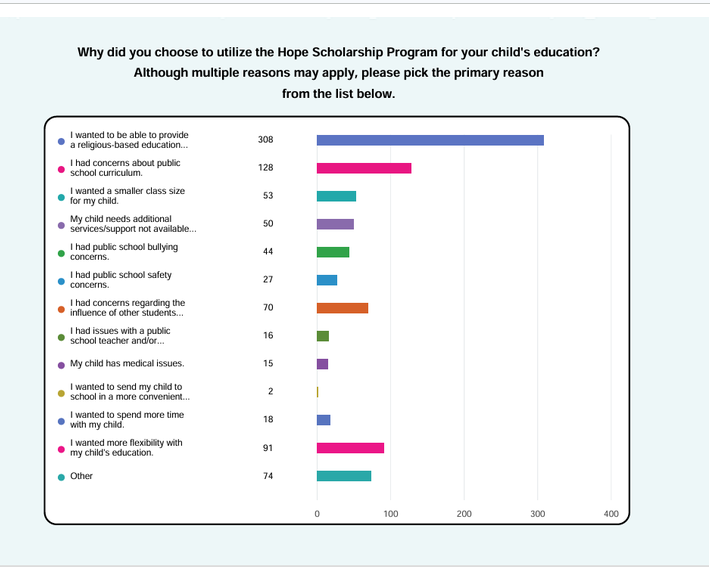
For 30 years I watched parents choose between their convictions and their budget. The Hope Scholarship ended that, and when the state asked families why they chose it, the most common answer was the one I had heard across my desk for decades: they wanted a religious education for their children.
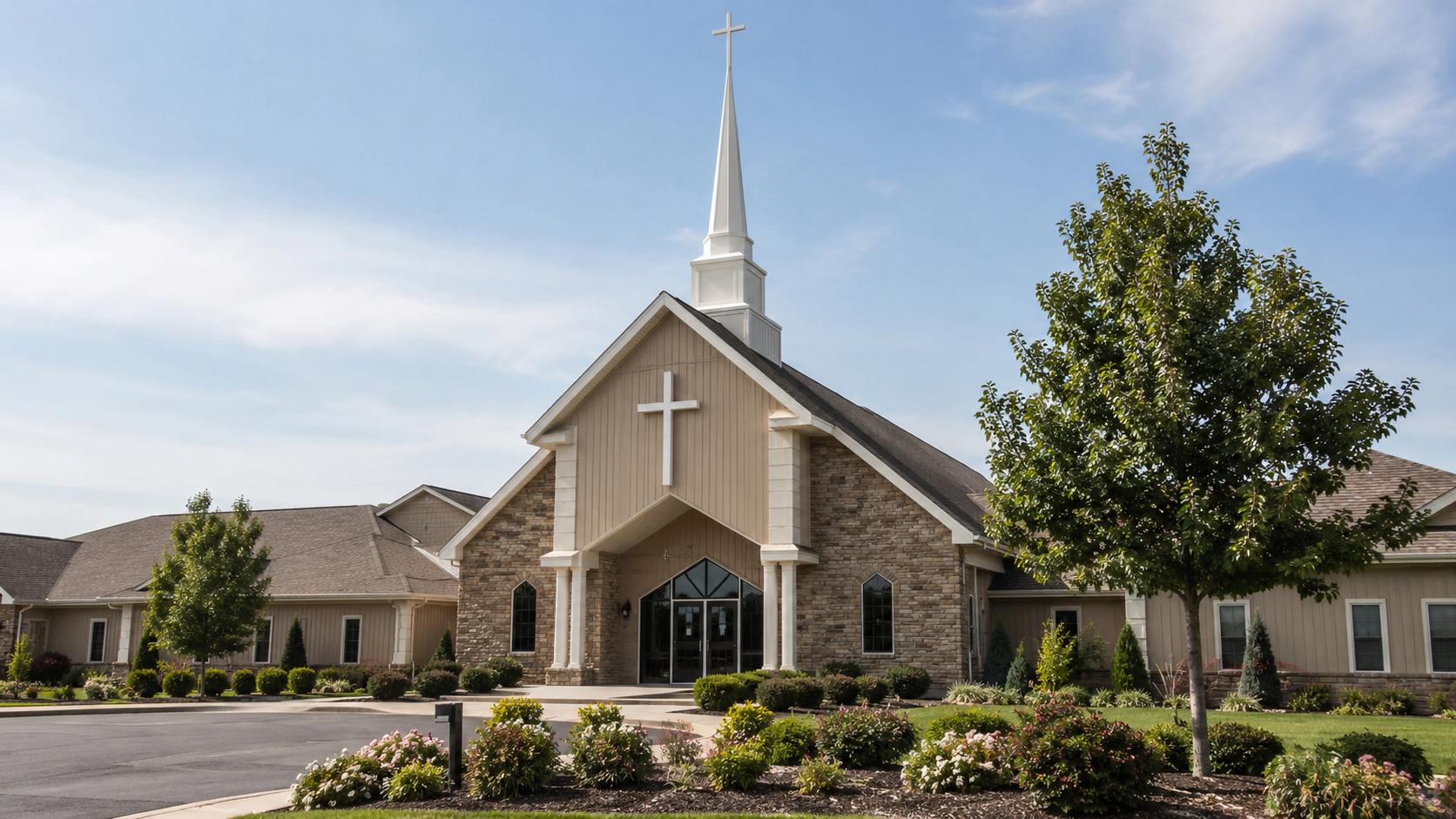
But the part of this story I care about most has not happened yet. For generations, a Christian school was possible only where a church was large enough to carry one, and that left most of our small towns with no option at all. Hope changes the math, and it arrives as churches across the country are being urged to open their doors Monday through Friday in whatever form fits them, whether a full school, a small one meeting in a fellowship hall, a hybrid of classroom and home, a cooperative, or a satellite of an established school in the next county.
That is where the WVCEA comes in. Hope provides the opportunity, and our organization supports and strengthens both existing schools and new ones, with help on everything from organization and setup to state requirements, curriculum, teacher training, and accreditation.
This lawsuit asks a court to close the door on the families still waiting, most of whom live in exactly the kind of small communities where one of these new schools is the only Christian option there will ever be. Hope is the first policy in my lifetime that has treated the sacrifices of Christian education as a public good rather than a private eccentricity, and it has come just as a new generation of schools is ready to be born.
Set his words beside the situation in Dingess and a different possibility comes into view. A small town stands to lose its only school. The lawsuit's response is to halt scholarship payments across the state in the hope that a funding formula might, by some indirect mechanism, keep one building open a little longer. Dr. Brokke describes another response entirely. For the first time in his professional life, he sees that a community of that size can create a school of its own, in a fellowship hall or a cooperative or a satellite classroom, or possibly in it's current building, with the guidance of an association that has done the work many times before. He is careful not to present this as a replacement for a sound public school, and it is not one. It is a door that Hope has opened in places where, before Hope, no hope existed, and it is precisely the door the lawsuit asks a court to close. The choice that parents have now did not exist before the Hope Scholarship. It is now possible for parents to choose to have a school in Dingess that is managed by people who live there, without any money coming out of their pockets.
Common ground, and where it lies
The parties to this dispute agree on more than the pleadings suggest. They agree that Mingo County's schools are failing the children in them, that the school aid formula has not kept pace with declining enrollment, and that the power to correct both belongs to the Legislature. The complaint says so in paragraph 83; the Constitution says so in Article XII; every one of the five comments says so in his or her own words. They agree that the children of Dingess are owed a remedy. What divides them is whether a court should suspend the education of thousands of other children while the Legislature is pressed to do what all sides agree it must. Is the priority our children and the goal providing the best education for them? Is Hope the tool that actually unites them rather than divides them?
Scripture has a good deal to say about that choice. The apostle Paul, writing to a church that had taken its quarrels before the magistrates, asked, "Is it so, that there is not a wise man among you? no, not one that shall be able to judge between his brethren?" (1 Corinthians 6:5). His point was not that courts are illegitimate; Romans 13 is clear that they are ordained of God. His point was that a community which reaches for the magistrate first has stopped doing the harder work of counsel, correction, and reconciliation among its own members. The Hope families and the Dingess families are members of the same commonwealth and, many of them, of the same Church. Neither has wronged the other. The wrong the plaintiffs describe was done in Williamson and in Charleston, by a county board that would not act and a Legislature that has not yet acted, and it is to those bodies that Scripture and the Constitution alike direct the appeal.
The Legislature convenes in January. The bills that failed in 2026 can be reintroduced, the regulations the isssues describe can be amended, and the Mingo County Board of Education, whose procedures the companion suit already challenges, answers to the voters who elected it. Meanwhile, under universal eligibility, a community that has never had a Christian school could now build one, and the WVCEA has said it will help. These are the remedies that could change education opportunities in Dingess. An injunction does not. It would take from one set of children in the name of another, and leave the formula, the board, and the school exactly as they are. West Virginia's churches, legislators, and parents have worked together before, and united they can do what no court can do in their place. Senator Roberts stated it rightly: major on the majors.
Sources: Verified Complaint, McCloud v. West Virginia State Treasurer, No. CC-20-2026-C-1103 (Kanawha Cnty. Cir. Ct., filed Sept. 4, 2026), ¶¶ 2-3, 9, 110-111 and Prayer for Relief; West Virginia Constitution, Article XII, §1 and §5; State v. Beaver, 248 W. Va. 177, 887 S.E.2d 610 (2022), as reported by the Parkersburg News and Sentinel, Nov. 2022; written statements to His Good News from Treasurer Larry Pack, Sen. Patricia Rucker, Sen. Rollan Roberts, Dr. Dan Brokke, and Katie Switzer, Sept. 2026; West Virginia Watch, Sept. 6 and Sept. 8, 2026; West Virginia Public Broadcasting, Sept. 8, 2026; WOWK, Sept. 8, 2026; WBOY, Sept. 8, 2026; The Intelligencer, Sept. 2026; West Virginia Department of Education, intervention announcement, March 12, 2025

HGN Staff
His Good News magazine seeks to unite and empower parents, educators, legislators, and voters in West Virginia to support and advance Christian education, religious freedom, and conservative values. By fostering a strong Jesus-based foundation within our communities, we can influence legislation, protect religious freedoms, and ensure that our children receive a quality Christian education.