
Honoring Those Who Grow Older
A theology of aging calls churches to esteem older adults as image-bearers and care for them as family.
At the end of 2026, I will transition to a new part-time role in my educational career. After 32 years of teaching full-time, I find this change in status and workload both disorienting and mysterious. Do I know how to not work full time? What does this change in role mean for my identity? Is this what it means to “grow old?”
What is a new experience for me is true for about one-third of our church membership. 1 We are the “senior saints,” the “elders” (and I don’t mean “pastors”), and the “older adults.” It’s not uncommon for us to become overlooked, isolated in our own “senior ministry.”
As an aging theologian, I don’t like the sound of what I’ve just written about myself and my fellow “grown-ups.” So, in this article, I will explore Scripture and develop a theology of aging.
What does Scripture say about aging?
From its opening chapter, Scripture affirms that all human beings are created as image-bearers of God (Gen. 1:26-27). Accordingly, the elderly are persons who bear the divine image. This means that they mirror or reflect something of what God is like in their loving, truth-telling, wisdom, kindness, forgiving, and holiness. And they represent God by fulfilling the cultural mandate to exercise dominion over the rest of the created order for its benefit and for the flourishing of human society (Gen. 1:28).
Because such image-bearing is a holistic and permanent status, the elderly are not, due to their advancing age, diminished image-bearers. They are not, due to their decreased capacity to work, earn a living, and contribute economically, lessened in value. They are not, due to their fading health and need for physical assistance, “drains” on society.
On the contrary, Scripture highlights the elderly in various ways. Aging is to be seen as a blessing: “Gray hair is a glorious crown; it is found in the ways of righteousness” (Prov. 16:31; 20:29). Advancing in years is beneficial to the elderly and to others for providing wisdom: “Wisdom is found with the elderly, and understanding comes with long life” (Job 12:12). Accordingly, the Lord instructs his people “to rise in the presence of the elderly and honor the old” (Lev 19:32). Far from the contemporary dismissal and disparagement of the elderly, the biblical perspective calls for greater esteem to be given to the aged.
Such respect flows from and imitates God himself. The Lord promises his people, “who have been sustained from the womb, carried along since birth, I will be the same until your old age, and I will bear you up when you turn gray. I have made you, and I will carry you; I will bear and rescue you” (Is. 46:3-4). From the beginning of life to its end, God is the Sustainer of and Provider for his image-bearers, up to their last days. This divine pattern of upright treatment of the aged is to serve as a model for the Church; it too is to honor, provide resources for, and protect the elderly in its midst.
Generally speaking, Scripture commands the church family “don’t rebuke an older man, but exhort him as you would a father … older women as mothers” (1 Tim. 5:1-2). The Church is to be characterized by a familial atmosphere, with careful treatment of the elderly. More specifically, Scripture instructs the Church to “support widows who are genuinely in need”; that is, if they do not have children or grandchildren to care for them, the Church is to provide for them (1 Tim. 5:3-4). Widows constitute “a definite, openly recognized group qualified to receive financial assistance.” 2 By caring for them specifically, the Church mirrors God’s concern for the elderly.
Developing a theology of aging
Theologically, how are we to account for the reality of aging? Overall, a limit to human life is in place as a ruinous effect of sin. As Moses reveals in prayer (Ps. 90:7-10):
“. . . we are consumed by your [God’s] anger; we are terrified by your wrath. You have set our iniquities before you, our secret sins in the light of your presence. For all our days ebb away under your wrath; we end our years like a sigh. Our lives last seventy years or, if we are strong, eighty years. Even the best of them are struggle and sorrow; indeed, they pass quickly and we fly away.”
Aging as a precursor of death is part and parcel of that consequence of sin. As Paul affirms, “all have sinned and fall short of the glory of God” (Rom. 3:23), with this devastating result: “the wages of sin is death” (Rom. 6:23). So fallen image-bearers age, leading to death.
At the same time, aging is not to be experienced as evil in and of itself. Diminishing capacities and advancing frailties, like all human limits, should not be viewed as God’s condemnation for personal sins (Rom. 5:1). Nor should they be seen as boundaries that beckon the aging to autonomously break through and forcefully overcome, resisting them by spending outlandish amounts of money to stave off the inevitable. At the same time, these infirmities do not invite the elderly to passively capitulate to them. Rather, the elderly should soberly and thankfully embrace them.
But why view progressing feebleness as a blessing? One reason is that suffering prompts humility, which is a virtue that honors God and imitates the way of Jesus. As Paul reminds us in Philippians, “when [Jesus] had come as a man, he humbled himself by becoming obedient to the point of death—even to death on a cross” (Phil. 2:7-8). A second reason is that the vulnerabilities due to aging play an important role in conforming the elderly to the image of Christ—as he bore sufferings leading to death, so the elderly bear sufferings leading to death. As the end of their life draws near, the elderly can rejoice in the privilege of walking the path of their Lord, who promises, “I will bear you up when you turn gray. I have made you, and I will carry you; I will bear and rescue you” (Is. 46:3-4).
Footnotes
1. According to the U.S. Census Bureau, “American Community Survey” (2019), seventeen percent (17%) of the American population is sixty-five (65) years and older. According to the Faith Communities Today study (2020), thirty-three percent (33%) of American church membership is senior citizens. Lifeway Research, “Average U. S. Pastor and Churchgoer Grow Older,” https://research.lifeway.com/2021/11/01/americas-pastors-and-churchgoers-are-getting-older/#:~:text=Since%202008,%20the%20aver.
2. Water Liefeld, 1 and 2 Timothy, Titus, NIV Application Commentary (Zondervan, 1999), 181.
Editor’s note: And here’s the Good News: God sustains his people through old age, and the church can reflect his care by treating older believers as family. Sometimes that means meeting a practical need. It also means making time to hear their wisdom and welcome their participation in the life of the congregation. Which older member of your church could you visit this month, and what would you ask them about the Lord’s faithfulness in their life?
This article was originally posted on the Ethics and Religious Liberty Commission (ERLC) blog. Used by permission. erlc.com
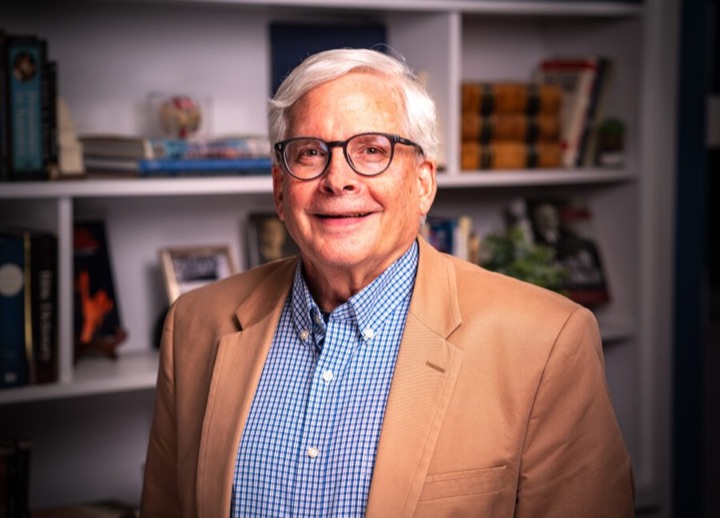
Gregg Allison
Gregg R. Allison is a Christian theologian, an ERLC senior fellow on marriage and family, and an elder at Sojourn Community Church. He has taught theology at Southern Baptist Theological Seminary and is the author of Historical Theology and Sojourners and Strangers.