Your Senior’s Future
A Living to Earn, a Purpose to Fulfill
Soon your child will walk across a graduation stage. You will remember the first day of school and wonder how the years passed so quickly. Then comes the question every family must face: What happens next?
College? A technical program? An apprenticeship? Work?
As Christian parents, we have another question to help our children answer: How will you use your “work” to serve God and the people He places in your life?
That question belongs at the center of career planning. Our children need practical skills and a way to support themselves. They also need a purpose that carries them beyond the next paycheck.
1. Choose a vocation through which you can serve God
A nurse serves through caring for patients. An electrician protects families by doing safe, honest work. A teacher helps children develop their abilities. A business owner serves through useful products, fair treatment and keeping promises.
Christian service reaches into every honest vocation.
Colossians 3:23–24 says:
“And whatsoever ye do, do it heartily, as to the Lord, and not unto men; Knowing that of the Lord ye shall receive the reward of the inheritance: for ye serve the Lord Christ.”
Before asking your senior which school they prefer, ask what abilities they have, whose needs they notice and what work they are willing to learn to do well.
Then examine the opportunities and costs.
The paths that we as parents followed may not be the “right path” for our children.
The economy, inflation, and the challenge that AI brings are just a few of the points that not only confuse parents but also frustrate and confuse our children who are preparing to graduate. Their big question is “Does the American Dream still exist for them?”
Pew Research Center found that 87% of Americans believe buying a home is harder for today’s young adults than for their parents’ generation. Eighty-two percent say the same about paying for college and saving for the future, while 80% say covering basic expenses is harder.
Harvard’s fall 2026 Youth Poll found that 69% of Americans ages 18–29 felt more fearful than hopeful about America’s future. Only 25% expected to be financially better off than their parents at the same age.
Parents can help turn those fears into practical questions: What training do I need? What will it cost? What can I earn? How can I serve?
Put earnings and debt beside the program name
The following published figures show why families should compare individual programs. Earnings are annual medians; debt is median federal student debt among borrowers at graduation.
| School and program | Graduate earnings | When measured | Federal student debt |
|---|---|---|---|
| WVU—bachelor’s nursing | $83,750 | Four years after graduation | $26,000 |
| Marshall—bachelor’s nursing | $77,609 | Four years after graduation | $27,000 |
| WVU—bachelor’s teacher education, specific subject areas | $51,403 | Four years after graduation | $25,242 |
| Marshall—bachelor’s teacher education, specific levels and methods | $43,659 | Four years after graduation | $25,886 |
| Appalachian Bible College—bachelor’s Bible/Biblical Studies reporting category | $28,980 | Four years after graduation | $12,865 |
| Ashland Community and Technical College—welding/precision metalworking certificate category | $36,796 | One year after graduation | $5,500 |
| Ashland Community and Technical College—electrical/power transmission certificate category | $27,034 | One year after graduation | $7,250 |
Cost versus reward is something every parent and graduate should consider. The sources below reproduce federal College Scorecard program data and there will be many variables to consider. The graduates may work in different states, and the one-year trade figures describe an earlier career stage than the four-year degree figures.
A student choosing nursing should understand the clinical responsibilities as well as the earnings. A student choosing teaching should understand the classroom as well as the salary. A student choosing ministry should examine how that work will be supported.
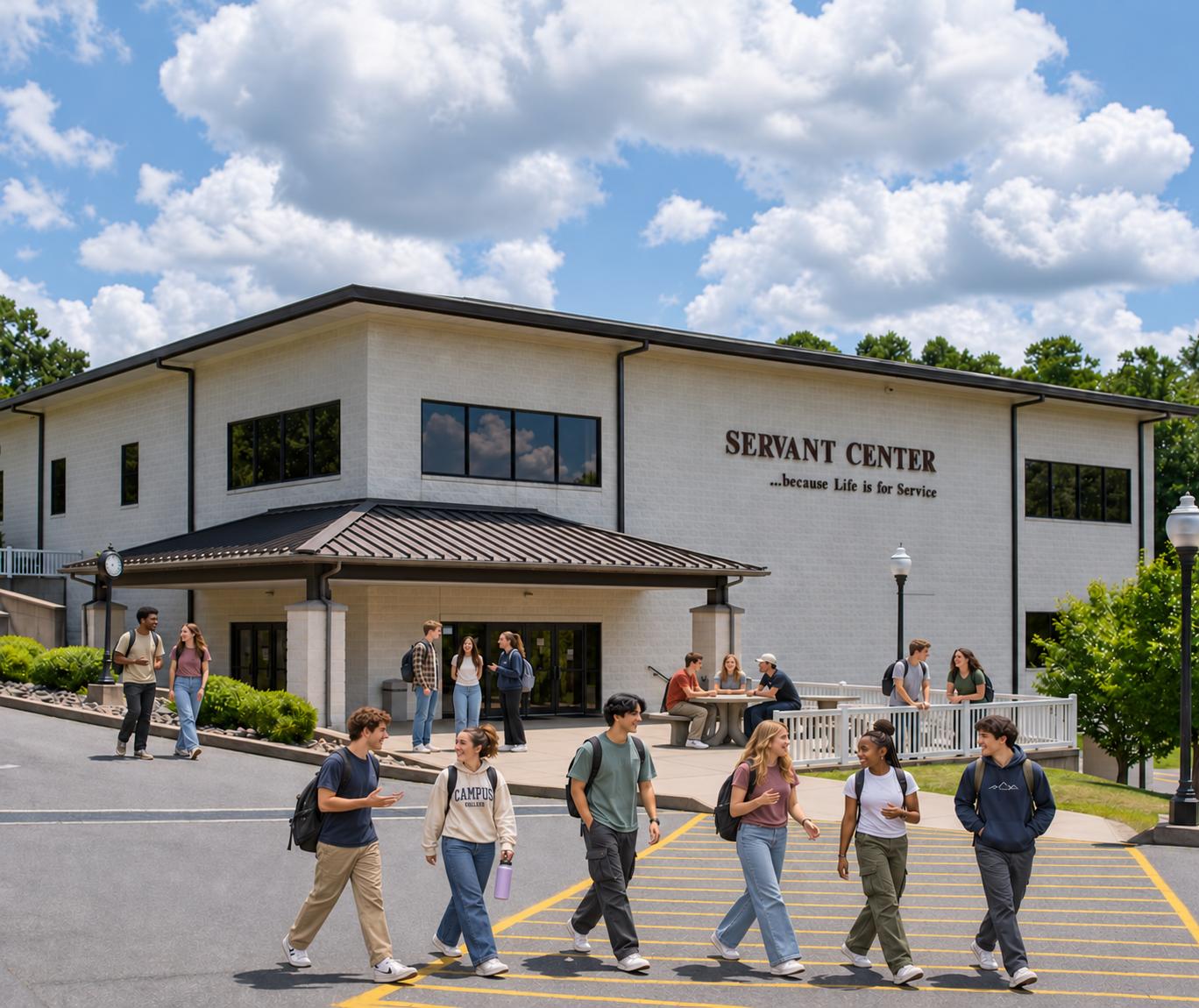
Many parents promote Appalachian Bible College, whose goal is to train students for a life of service, regardless of their vocation
All ABC students pursuing a Bachelor of Arts degree double-major, with their first major being Bible/Theology and their second major being a ministry-specific major, such as Pastoral Ministry, Missions, Biblical Counseling, and the newest major – Organizational Management. Its Elementary Education program offers a State Licensure concentration for students pursuing the public-school teaching pathway.
ABC offers a 100% Tuition scholarship for full-time, resident students their first year at ABC’s main campus. This “BIG Scholarship” will be combined with Pell Grant and other ABC aid to equal 100% of tuition. For 2026-27, that’s $18,120 in guaranteed minimum aid for those that qualify.
ABC states that “every Christian can benefit from at least a year of Bible college. While this scholarship will certainly provide big financial benefits to many students, our greater desire is that it will have BIG spiritual impact by ‘Biblically Inspiring Godliness’ as students build a solid foundation upon God’s Word regardless of their vocation.”
Could you imagine the inspiration of being a carpenter and explaining God’s word to all the people you work with?
2. Christian education is not just “school” but must permeate all five points of the student’s life.
The five areas represented in the His Good News logo—family, work, church, government and school—remind us that Christian education should be the foundation out of which all other vocations grow.
Our children learn what we believe by watching how we live in each of them.
In the family, they learn responsibility, generosity and how to handle disagreements. They watch us spend money, keep promises and care for others.
At work, faith becomes visible through honesty, competence and service. Employees learn to give a fair day’s work. Employers learn to exercise authority responsibly.
In the church, young people learn Scripture, worship and fellowship. They also need adults who will explain how biblical principles guide difficult workplace decisions.
In government, they learn the responsibilities of citizenship: seeking truth, practicing justice, respecting others and holding authority accountable.
In school, they develop knowledge and skills while encountering ideas about success, human worth and life’s purpose. Parents and churches can help them examine those ideas through Scripture.
Graduation changes the setting of their education. It does not end it.
First Corinthians 10:31 says:
“Whether therefore ye eat, or drink, or whatsoever ye do, do all to the glory of God.”
That principle belongs in a workshop, hospital, classroom and public office as surely as it belongs in a church.
3. AI is changing careers—and renewing appreciation for skilled hands
Many families grew up hearing that a degree and an office job offered the safest future. Artificial intelligence is forcing a closer examination of that assumption.
AI can generate graphics, write code and prepare instructional materials. International Labour Organization research identifies growing exposure in highly digital occupations, including software and media. Research on actual AI use also finds substantial activity in software, graphics, writing and educational tasks.
Teachers, programmers and designers will need to show the judgment, creativity and relationships they bring to their work as these AI tools become more capable. A great teacher will never be replaced by AI but a great teacher who knows how to use AI will eventually replace the great teacher who does not.
Meanwhile, today’s generative AI cannot walk into a house and replace unsafe wiring, weld a joint at a construction site or provide bedside nursing care. Those professions also use technology, but their essential hands-on work is harder to replace with software.
Families who once treated blue-collar work as a second choice should examine its skill requirements and earning potential.
| West Virginia occupation | Published annual pay |
|---|---|
| Carpenter | $48,710 median, May 2025 |
| Welder | $50,040 average, May 2023 |
| Public-school teacher, bachelor’s degree and three years’ experience | $47,138 state salary, plus applicable county additions, 2026–27 |
The trade figures cover workers at different experience levels, showing the broader occupation rather than a particular school’s new graduates.
Skilled trade technician jobs are growing. BLS projects approximately 62,800 carpenter openings and 40,300 welding-related openings annually nationwide over the coming decade, including replacements for retiring workers. Nursing offers substantial opportunity: The Bureau of Labor Statistics projects approximately 180,800 registered-nurse openings annually nationwide over the next decade. An aging population and the continuing need for hands-on patient care are helping drive that demand.
As one Christian school parent pointed out, “less than half of our graduating seniors plan to attend college next year. When our first son graduated he wanted to stop learning out of a book and start earning a living so he went to trade school and in less time that it would take to get a college degree, he became an HVAC technician and earns more than a recent college graduate. Our second son who graduates this year is taking his core subjects at home, trains in the morning as a welder and goes to the rest of his senior classes in the afternoon. No longer are skilled trades technicians looked down on by college graduates. The path that my wife and I took with college is no longer the only path to a successful career.”
Explore training close to home
The West Virginia Community and Technical College System includes 9 main institutions with associate degrees, certificate programs, and industry training. There are many more throughout the state.
Search for West Virginia career and technical training programs
Ask each program: What did your recent graduates earn? How many found work in their field? How much did borrowers owe? Which employers hire them?
And now, the good news
Your child can earn a living while serving God through useful work.
Their opportunity may begin at a university, Bible college, community college, career center or apprenticeship. Help them examine the training, earnings and debt. Introduce them to Christians who demonstrate faithfulness in their vocations.
Then celebrate a thoughtful next step toward a life of responsibility, purpose and service.
A question to ponder: When we ask our seniors what they want to become, are we also helping them consider whom God wants them to become?
Sources
Pew Research Center: Young adults’ financial milestones
Harvard: Financial outlook findings
WVU nursing: earnings and debt
Marshall nursing: earnings and debt
WVU teacher education, specific subject areas: earnings and debt
Marshall teacher education, specific levels and methods: earnings and debt
Appalachian Bible College: Bible/Biblical Studies earnings and debt
Ashland: published program earnings and debt
Ashland electrical certificate: earnings and debt
Mountwest welding: public outcome availability
College Scorecard: underlying federal data
ILO: Generative AI and occupational exposure
Anthropic: AI use across occupations
BLS: West Virginia wages, May 2023
WV teacher salary schedules, 2026–27, page 4
Woody Williams Center: Career programs
Appalachian Bible College: Academics
Appalachian Bible College: Elementary Education
Scripture: Colossians 3:23–24 and 1 Corinthians 10:31, King James Version.
The five HGN logo areas were supplied by His Good News.
Editor’s note: And here’s the Good News: Parents can help their seniors make a thoughtful next decision even when career options feel uncertain. Comparing training, costs, and earnings can clarify what a path requires. Meeting a Christian who does that work faithfully can show a young person whom they might serve and what faithfulness can look like there. Who could you ask to share a candid account of their work with your senior this month?

HGN Staff
His Good News magazine seeks to unite and empower parents, educators, legislators, and voters in West Virginia to support and advance Christian education, religious freedom, and conservative values. By fostering a strong Jesus-based foundation within our communities, we can influence legislation, protect religious freedoms, and ensure that our children receive a quality Christian education.