
Shepherding a Church After an Election
Pastors can cultivate Christian unity through preaching, charitable disagreement, and attention to the church’s mission.
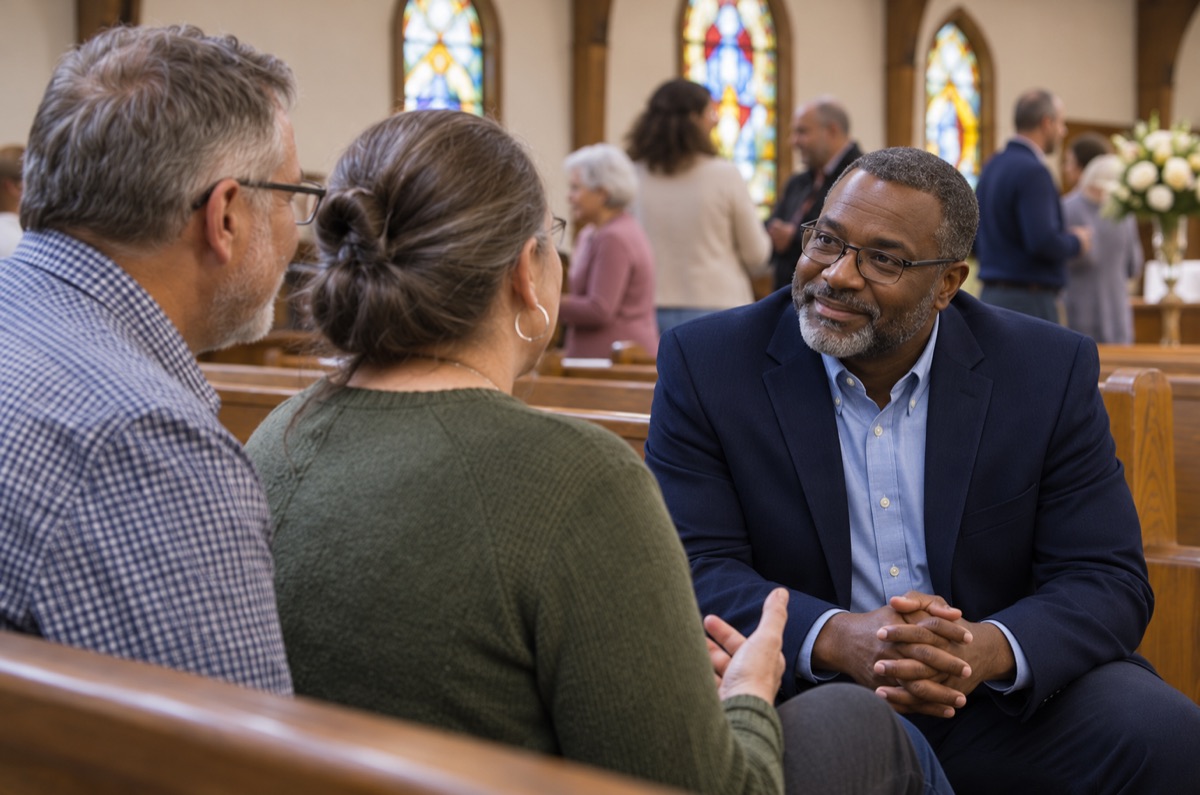
As we reflect on the 2026 midterm elections, let us remember that as pastors, our responsibility does not end when the polls close. In many ways, our most important work begins afterward. We are to help believers understand that their identity in Christ must remain greater than their political affiliations. In Maryland, where I serve, the midterm elections have unfolded against a familiar backdrop of competing political convictions and disagreements over the direction of our state and nation. Across the country, the elections have likewise exposed the deep ideological divisions shaping American public life. Whether celebrating victories or processing disappointments, one fact remains: Our unity in Christ is greater than our political differences.
Scripture encourages us to maintain “the unity of the Spirit in the bond of peace” (Eph. 4:3). Experiencing this unity in the Church does not require us to agree on everything. Rather, it calls us to exercise humility and patience toward one another as we affirm our shared commitment to Christ. In 1 Corinthians 1:10, Paul appeals to believers to avoid divisions and to be united in mind and judgment. Therefore, as political identities increasingly threaten to overshadow our identity as members of the body of Christ, this biblical exhortation becomes especially relevant as we shepherd our congregations in the aftermath of the midterm elections.
Let me offer a few practical ways pastors can lead their congregations faithfully through these polarized times.
Preach Christ above political parties
Our pulpits should proclaim the whole counsel of God rather than become extensions of partisan campaigns. A recent computational analysis reveals a troubling trend in which sermons frequently shift from spiritual teaching to targeted partisan opposition and political base mobilization during election cycles. 1 Despite this drift toward overt electioneering in some congregations, the vast majority of pastors reject this practice. In fact, a recent national poll by Lifeway Research indicates that 93% of Protestant pastors firmly believe that the pulpit serves a higher calling and, therefore, refuse to endorse political candidates from the pulpit. 2 Pastors who resist this pressure clearly demonstrate that their congregants are citizens of heaven first and that the pulpit must never become a tool for partisan politics. 3
Model charitable disagreement

James 1:19 instructs believers to be quick to hear, slow to speak, and slow to anger. Pastors should create an environment where Christians can discuss difficult public issues without compromising Christian love. Research in religious communication suggests that a pastor’s communication strategy plays an essential role in fostering an organizational culture capable of withstanding political friction. 4 When pastors actively model Christlike love and tolerance from the pulpit, they directly counter the social pressure of political polarization and teach the congregation how to engage complex civic issues without fracturing communal unity. 5
Redirect our churches toward their mission
Qualitative research examining local church leadership during periods of intense political polarization reveals that when a congregation prioritizes a primary community identity rooted in Christ over partisan politics, the resulting missional unity acts as a powerful public apologetic for the credibility of the gospel. 6 Pastors must therefore foster unity by redirecting the church to remain focused on its mission because a church’s outward witness becomes severely fragmented and weakened when internal tribalism takes precedence over its primary missional mandate. 7 Jesus’ prayer in John 17:21 reminds us that Christian unity serves a greater purpose: that the world may believe the Father sent the Son.
Conclusion
Let us remember that nothing in this fallen world is eternal. Political circumstances will eventually change. Elected officials will come and go. But the mission of the Church, to proclaim the gospel and make disciples, remains unchanged. Therefore, we must resist the temptation to measure the effectiveness of our ministry by political outcomes. Pastors, as you prepare for the next few Sunday services after the midterm elections, you have the opportunity to remind your congregation that our primary identity is found in Jesus Christ—not in any political party, candidate, or administration—and he binds us together in unity for his name’s sake.
Footnotes
1. A. Smith et al., “Systemic Electioneering from the Evangelical Pulpit: Evidence from a Computational Analysis,” Proceedings of the National Academy of Sciences 123, no. 42 (2026): e2603911123, doi.org.
2. Aaron Earls, “Regardless of Legal Indecision, Few Pastors Want to Endorse Candidates,” Lifeway Research, October 13, 2026, https://research.lifeway.com/2026/10/13/regardless-of-legal-indecision-few-pastors-want-to-endorse-candidates/.
3. Andrew L. Williams, “Politics and Preaching: How Religious Elites Justify Addressing or Avoiding Political Topics,” Religion in Public (blog), January 21, 2025, https://religioninpublic.blog/2025/01/21/politics-and-preaching-how-religious-elites-justify-addressing-or-avoiding-political-topics/.
4. Paul A. Djupe, and Jacob R. Neiheisel. “The Religious Communication Approach and Political Behavior.” Political Psychology (2022). https://doi.org/10.1111/pops.12848.
5. Lifeway Research, “Political Tension and the Pastor,” Lifeway Research Insights, December 18, 2015, https://research.lifeway.com/2015/12/18/political-tension-and-the-pastor/.
6. Andrew Bramsen. “The Impact of Political Polarization on Church Life in the Upper Midwest.” Day of Scholarship, October 25, 2023. https://spark.bethel.edu/dayofscholarship/fall2023/oct25/26.
7. William P. Gregory. “Reclaiming Christian Unity in the Theology of Mission.” Missiology 54, no. 1 (2026). https://doi.org/10.1177/00918296251372139.
Editor’s note: And here’s the Good News: Christ gives believers a shared identity that can sustain their fellowship through political disagreement. Pastors can teach their people to listen patiently, and congregants can put that teaching into practice in ordinary conversations and shared service. The weeks after an election offer a chance to show what love for fellow church members looks like. Who in your congregation could you listen to more carefully or invite to serve alongside you?
This article was originally posted on the Ethics and Religious Liberty Commission (ERLC) blog. Used by permission. erlc.com

Greg Kame
Dr. Greg Kame is senior pastor of Glen Burnie Baptist Church in Maryland and an adjunct professor of Christian theology at Regent University. He holds a doctorate in systematic theology from the University of South Africa and serves in Baptist associational and state convention leadership.